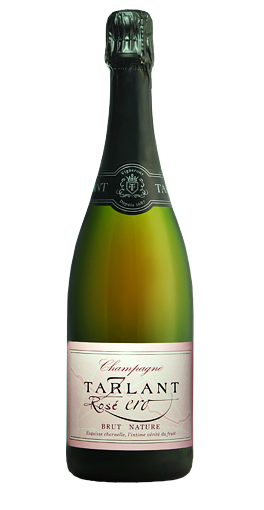
Champagne Tarlant - Brut Nature Rosé
15,5/20
RVF
89/100
Robert Parker
Notes: Robert Parker 89/100, RVF 15.5/20
"The brut nature wines with their aggressive bubbles have gained in civility of aromas while remaining lively and tangy. The most energetic and precise is the rosé made from 85% Chardonnay." (Le Guide des Meilleurs Vins de France 2014 - RVF). A rosé that impresses on the palate with its exotic fruitiness and natural vinosity, its elegance and harmony!
Buy your Tarlant Champagnes at the best price in a private sale!
from €99 on your first order
Eye
beautiful sparkling dress, coral pink
Nose
Elegant, with hints of blood orange. Red fruit aromas follow closely behind, while touches of pepper add a subtle spicy note.
Mouth
Both bright and full-bodied, the palate impresses with its exotic fruitiness and natural vinosity. Dominated by redcurrant and raspberry, aromas of spicy vanilla and tonka bean add a surprising effect.
Serve
at 10-12°C
Open
and serve!
Drink from
2014
Drink before
2018
Food and wine pairings
Red fruit crumble and fig tiramisu round off the aromatic profile of our Champagne Rosé Zero, imbued with provocative emotions...
Bettane & Desseauve
Rated estate (2016 guide) 2 stars (A serious and recommendable production, but a little more consistent and uniform than the previous one)
About the estate:
This dynamic family business, located in the heart of the Marne Valley, is growing steadily and is not afraid to offer wines from specific plots, with little or no dosage, always of a robust constitution. The Tarlant family has been growing vines since 1687 and began marketing its first bottles in 1929 under the name Carte Blanche. Today, the next generation is well represented by Jean-Mary and Micheline Tarlant and now their children Benoît and Mélanie. The 14-hectare vineyard, cultivated with care and organic fertilizers, comprises 55 plots planted with the three traditional grape varieties (Pinot Noir, Meunier, and Chardonnay), as well as Pinot Blanc, Petit Meslier, and Arbanne.
Guide Hachette des vins
Rated estate (2016 guide) Award-winning wines (This producer's wines are regularly recognized by the guide)
About the estate:
Deeply rooted in Champagne, the Tarlant family were already growing vines in the days of Dom Pérignon. The estate was established in 1780 in the Marne Valley, with the first champagne delivered in 1929. Today, it boasts a 14-hectare vineyard and a renowned style. At the helm since 1999 are Benoît and Mélanie, the children of Jean-Mary Tarlant, who presides over the house. In the cellar, Benoît vinifies in small vats or barrels by "climat," without malolactic fermentation, ages the reserve wines on lees, and favors low dosages (extra-brut) or no dosage at all (brut zéro).
Robert Parker - Wine Advocate
Wine rated (2011 guide) 89/100 (Very good wine)
Rated Recommended (Wine producer recommended by Robert Parker - The Wine Advocate)
About wine:
Brut Nature Zéro Rosé is a delicate, light-colored wine that impresses with its understated personality. Dried cherry, crushed flowers, and mint are just some of the nuances that emerge from this slightly evanescent rosé.
RVF - La Revue du Vin de France / Guide des Meilleurs Vins de France
Wine rated (2014 guide) 15,5/20 (Good wine)
Rated estate (2016 guide) 1*Star (Up-and-coming stars or quality winemakers producing good wines; you won't be disappointed when tasting the wines from these estates)
About wine:
The brut nature wines with their aggressive bubbles have gained in civility of aromas while remaining invigorating and tangy. The most energetic and precise is the rosé, made from 85% Chardonnay.
About the estate:
As close as possible to its origins, pure Champagne wine can now be found on the labels of this family estate, one of the most dynamic in Champagne. In the heart of the left bank of the Marne Valley and Surrmelin, Benoît Tarlant (the winemaker) and his sister Mélanie (in charge of sales and communications) are gradually taking over from their parents. Their viticulture is demanding, adapted to a mosaic of soils and subsoils: from flinty sands to clays and limestones to pure chalk. Without yeast or enzymes, two-thirds of the vinification is done in wood. These champagnes have volume and chewiness, and they retain great freshness due to a light dosage: in 2010, the entire production was dosed minimally (extra-brut, 4.5g) or not at all (Nature). A true vintage policy is now in place and, like the greatest Champagne brands, Tarlant releases its wines after eight or ten years in the cellar, when they are at their optimum. Bravo.
Customer rating
4.2/5
based on 5 reviews
Review and opinion by Mr. OLIVIER V. Published on 03/31/2023
See all reviews from this customer
Note and opinion by Mr. MAZZA I. Published on 11/15/2015
See all reviews from this customer
Note and opinion by Mr. PIERRE DAVID P. Published on 08/19/2014
See all reviews from this customer
Review and opinion by Mr. FABRICE R. Published on 12/05/2013
See all reviews from this customer
Review and opinion by Mr. NICOLAS E. Published on 10/12/2013
See all reviews from this customer
Discover other wines from the estate
