
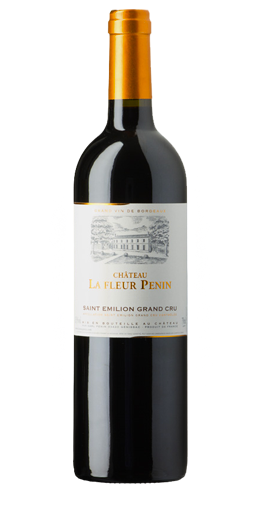
Château La Fleur Penin - Saint Emilion Grand Cru 2016

“Red berries, lively and taut on the palate, with freshness, vibrancy, lovely fruit, and fine, crisp tannins.” (Le Point - Wine Special) With a fruity and expressive style, the 2016 vintage reveals notes of red berries with a hint of vanilla. The attack is concentrated and powerful, then develops with finesse and elegance, featuring well-integrated tannins. Superb value for the price!
Buy your La Fleur Penin wines at the best price through a private sale!
Starting at €99 on your first order
Eye
Beautiful garnet-colored dress
Nose
Expressive with vanilla aromas and hints of red berries
Palate
Delicate and elegant, powerful and full-bodied
Serve
At 16°C
Open
1 hour before
Drink before
2030

Food and Wine Pairings
Enjoy it with a flavorful red meat, such as a wild boar steak, ribeye steak, confit lamb shoulder, or even fine hard cheeses...


Bettane & Desseauve
Rated estate (2020 guide): 2*Stars (A solid, recommendable wine, though slightly more consistent and uniform than the previous vintage)
About the estate:
Patrick Carteyron is one of the leading figures in the vast Bordeaux appellation. He has made his Château Penin a benchmark across various appellations, wine types, and vintages. The family-run estate has grown from 13 hectares in 1854 to 40 hectares today. The production of red wines—and especially the fine cuvées, Les-Cailloux and Grande-Sélection—takes place on a stony Quaternary terroir, the estate’s most prestigious. The sandy and clay soils, which are more common, are reserved for the production of delicious rosés and clairets. Year after year, the clairet remains “the” benchmark for this appellation. Here you’ll find a wide range of wines at every price point, all focused on fruit, quality tannins, and freshness, including a charming and generous white and rosé, and the famous clairet—as mentioned—with its consistently vibrant fruit, which has built the estate’s reputation. As for the reds, the wines are richly fruity and pleasing, notably a “Grande Sélection” cuvée that is always full of energy.

Guide Hachette des vins
Rated estate (2020 guide) Award-winning wines (This producer's wines regularly receive awards from the guide)
About the estate:
One of the most reliable names among regional appellations, with several “ Favorites ” to its credit. A 45-hectare estate situated on gravelly soil on the left bank of the Dordogne, across from Saint-Émilion. Founded by the Carteyron family in 1854, it has been managed since 1982 by Patrick, an oenologist.

RVF - La Revue du Vin de France / Guide des Meilleurs Vins de France
Rated Estate (2020 Guide) Selected (Please note that this guide is a ranking, and as such, all the estates listed here—even those without a star—represent, in our view, the pinnacle of French winemaking.)
About the estate:
Château Penin remains one of the finest examples of the Bordeaux and Bordeaux Supérieur appellations. While the wines have experienced a slight decline in quality in recent years, the 2014 vintage shows a return to greater concentration. The tannins are better integrated and offer a more defined style. The wines exhibit a more refined character, with a structure more distinctly shaped by the limestone and gravel terroir.
Customer Rating
4/5
based on 6 reviews
Review and comment by Mr. ANDRE E. Posted on April 28, 2020
A very high-quality wine, and it was a wonderful experience to have this site give me the opportunity to taste such excellent wines.
See all reviews from this customer
Review by Mr. BERNARD D. Published on May 21, 2022
See all reviews from this customer
Review by Mr. JOFFREY J. Published on December 5, 2021
See all reviews from this customer
Review by Mr. MICHEL B. Published on June 24, 2020
See all reviews from this customer
Review and comment by Mr. FREDERIC B. Posted on April 18, 2020
See all reviews from this customer
Review and rating by Mr. JEAN V. Posted on April 14, 2020
See all reviews from this customer