
21550 customer reviews
Château Chasse-Spleen

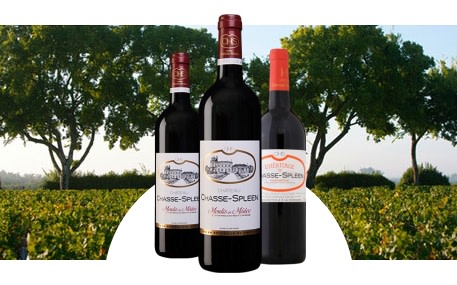
Located at the highest point of the Grand-Poujeaux hills, on the magnificent gravel soils, Chasse Spleen benefits from an exceptional terroir. Located halfway between Margaux and Saint-Julien, the 80-hectare vineyard—comprising four plots of Quaternary gravel—has an average vine age of 30 years. This historic estate has now become one of the jewels of the Médoc by appellation Moulis under the leadership of its owner, Mrs. Castaing.
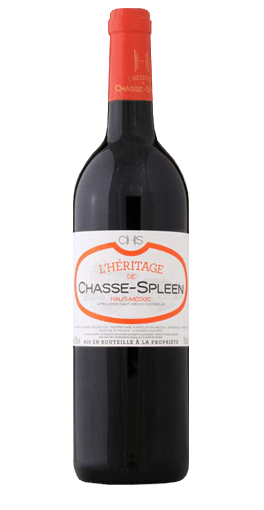
It is said that Lord Byron, a great wine lover, declared in the 1820s that “This wine is second to none at chasing away the blues! ” From there, it’s just a short step to chasing away the spleen! Located in the heart of the Médoc, in the Moulis appellation, Château Chasse Spleen spans nearly 90 hectares of vineyards, planted with 73% Cabernet Sauvignon, 20% Merlot, and 7% Petit Verdot. Classified as a Cru Bourgeois Exceptionnel, Château Chasse Spleen produces full-bodied, rich, and powerful wines. Notes of cocoa and oak blend perfectly with aromas of red berries and blackcurrant, supported by elegant tannins. The estate also produces two second wines: L’Oratoire de Chasse Spleen and L’Héritage de Chasse Spleen.
Chasse Spleen wines are produced from grapes grown in the Médoc region. They include red Bordeaux wines (which bear the Moulis AOC designation) and white Bordeaux wines. It is worth noting that the winery practices sustainable and organic viticulture. Many Château Chasse Spleen vintages have received high ratings from leading wine authorities such as Vinous, Robert Parker, the Revue des Vins de France, and James Suckling.
The Chasse Spleen wine was first classified in 1932 because, as the story goes, Mrs. Castaing (heir to half of the original estate) named her estate Château Chasse Spleen in 1863—eight years too late to be included in the 1855 wine classification. Since 1976, the estate has been owned by the Merlaut family and is now run by the third generation.
Their terroir and the various grape varieties
The vineyard is located on the hillsides of the Grand-Poujeaux area. There, Chasse Spleen wines benefit from a diverse terroir, with soils composed of clay, limestone, and Garonne gravel—pebbles typical of the region. The proximity to the Garonne River is a real asset, ensuring a good water supply. This allows the grape varieties needed for blending these wines to thrive. These include Petit Verdot and Sémillon for the white wine, as well as Cabernet Sauvignon, Merlot, and Cabernet Franc.
In addition to Château Chasse Spleen, the estate produces two other wines: Héritage de Chasse Spleen and Oratoire de Chasse Spleen.
Time for a tasting
Chasse Spleen wines feature a deep red color for the reds and a pale yellow color for the whites. On the nose, Chasse Spleen wines are very fragrant. The reds have pronounced aromas of red berries, curry, and toasted bread. The whites, on the other hand, have more herbal aromas, such as peach or boxwood. On the palate, the Chasse Spleen red offers fresh, characterful flavors: it’s a harmonious blend of fruit and spice. Its white counterpart, meanwhile, features notes of verbena and orange blossom.
Food and Wine Pairings
Chasse Spleen wines are a perfect fit for your holiday tables and Sunday lunches. In fact, they pair well with a wide variety of dishes. Chasse Spleen white wine follows the rules of traditional gastronomy and is served with fish and other seafood. It’s the perfect accompaniment to a plate of oysters or grilled shad. It also pairs wonderfully with cheese, especially when served with brocciu, a Corsican cheese.
Chasse Spleen red wine pairs well with pork or poultry dishes, such as old-fashioned turkey tenderloins. It can also be paired with rabbit stew or a leek quiche.
For more information, visit the website at Chasse-Spleen
Wine estates recommended by






Buy your Chasse-Spleen wines at the best price through a private sale!
Rated site21550 reviews
-20€
Starting at €99 on your first order




Loading...