1jour1vin
21735 customer reviews
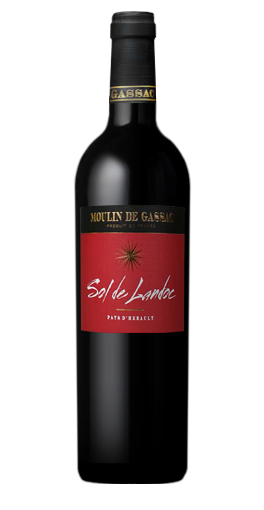
Moulin de Gassac - Sol de Landoc Old Vines 2012

Moulin de Gassac - Sol de Landoc Vieilles Vignes 2012

Wine rated 3.3/5Wine rated 3.3/5Wine rated 3.3/5Wine rated 3.3/5Wine rated 3.3/5
3.3/5 (15 customers)
Impressive in its complexity, the Sol de Landoc offers aromas of sun-ripened red berries, with hints of vanilla and caramel. This red wine bursts with flavor on the palate, featuring overripe, jam-like red berries, with plenty of roundness and suppleness. A flagship wine from the estate!

Buy your Daumas Gassac wines at the best price in a private sale!

Rated site
21735 reviews
-20€

Starting at €99 on your first order

Estate

Mas de Daumas Gassac

Vintage

Sol de Landoc

Vintage

2012

Designation

IGP Hérault

Region

Languedoc

Grape Varieties

60% Syrah, 40% Grenache

Regions

Villeveyrac terroir: very poor soils on stony hillsides dating from the Villafranchian

Viticulture

Vines are grown in small plots in the middle of the garrigue forest. We use only natural compost made from sheep manure from the Larzac region! Yield: 40–45 hl/ha

Grape Harvest

100% manual

Wine Production

100% destemming, slow maceration (15 to 20 days), temperature of 28 to 30°C

Livestock Farming

5 to 6 months in stainless steel tanks

Alcohol content

13,5%

Eye

A deep red color, verging on black. A majestic, brilliant disc

Nose

Powerful and complex: sun-ripened red berries, vanilla and caramel notes

Palate

Explosive, with delicious aromas of overripe, jammy red berries; very round and supple

Serve

in a carafe at a temperature between 18 and 20°C

Open

2 to 3 hours before serving

Drink starting at

2014

Drink before

2017

Production

15,000 bottles

Food and Wine Pairings

Food and Wine Pairings

Pair it with red meat, game, duck, spicy dishes...

More information at Mas de Daumas Gassac

More information at IGP Hérault

Bettane & Desseauve

Bettane & Desseauve

Rated estate (2027 guide): 3*Stars (High-quality production that serves as a benchmark in its sector)

About the estate:

Much has been written about the Daumas-Gassac estate. Aimé Guibert—who passed away in 2016—had identified high-quality terroirs in Aniane capable of producing a Cabernet Sauvignon not authorized by the local appellations. For his white wine, he also chose to produce a blend of Chardonnay, Viognier, and Petit Manseng, which likewise barred him from using the appellation. His estate therefore produces a red (an 80% blend of non-cloned Cabernet Sauvignon accompanied by about twenty other grape varieties, most of them rare) and a white (also a multi-varietal blend) under the Hérault IGP, which he has successfully positioned at a price point unprecedented in this category. The white is aged in stainless steel tanks, while the red is partially aged in barrels. Both the white and red wines exhibit unparalleled purity, precision, and complexity, and age remarkably well. The lineup is rounded out by pleasant IGP wines, designed to be enjoyed young. A sure bet in the region.
Hachette Wine Guide

Guide Hachette des vins

Rated estate (2027 guide) Award-winning wines (This producer's wines regularly receive awards from the guide)

About the estate:

A fine example of the rise of Languedoc wines across five continents, this estate—founded in 1971 by Aimé and Véronique Guibert—caused a stir a few years ago by offering regional wines at the same price as top Bordeaux wines. It has, however, remained at the top of its game with wines of consistent quality and remarkable aging potential. Today, this leading estate is run by the founders’ sons.
RVF - La Revue du Vin de France / Guide to the Best Wines of France

RVF - La Revue du Vin de France / Guide des Meilleurs Vins de France

Rated estate (2027 guide) 1*Star (Up-and-coming stars or high-quality winemakers producing wines of a high standard—you won’t be disappointed when you taste the wines from these estates)

About the estate:

Aimé Guibert was a leading figure in the revival of Languedoc’s wine industry and its rise to prominence first in France and then internationally, after purchasing his old farmhouse nestled along the banks of the Gassac River. He helped restore the potential of the limestone terroir of the Upper Gassac Valley—composed of glacial gravel—in the foothills of the Cévennes. The wide daily temperature range and the nature of the soils convinced him that this was a great terroir for Cabernet Sauvignon, which would be sourced from mass selection of the finest Bordeaux châteaux. Aimé’s sons—Samuel, Gaël, Roman, and Basile—now steer the estate’s future. Daumas Gassac has distinguished itself through its potential and longevity. Like the world’s great Cabernet Sauvignons, it is best enjoyed after at least a decade. While the estate’s legacy is immense and undeniable—and the quality of the reds is consistently high (even if the wines do not necessarily reflect the terroir)—we expect much more from the entire range.

Loading...