
21703 customer reviews
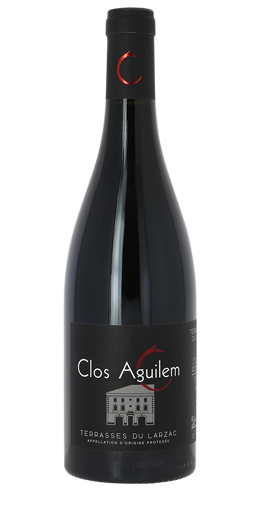
Clos Aguilem - Terrasses du Larzac 2016


2*Coup de Coeur
Hachette
“ It’s hard not to be charmed by this wine. Made from four grape varieties—mostly Carignan— it’s a true Languedoc wine, with a deep purple hue. Intense aromas of red fruits and spices rise from the glass: red currant, pomegranate, cinnamon, and vanilla. Behind a lovely freshness, the palate reveals a dense and powerful structure built on velvety tannins; here we find jam-like fruit and woody notes, joined by cocoa and licorice in a long, smooth finish.” (Le Guide Hachette des Vins 2019)
Buy your Clos Aguilem wines at the best price in a private sale!
Rated site21703 reviews
-20€
Starting at €99 on your first order
Eye
Garnet-colored, dense, with violet highlights
Nose
Powerful and sunny, with aromas of jammy red berries, mocha, and toast
Palate
Full-bodied, rich, and silky, with a beautiful texture supported by velvety tannins and notes of mocha on the finish
Serve
At 16-18°C
Drink starting at
2018
Drink before
2028

Food and Wine Pairings
Enjoy it with lamb chops, rib roast, or even a roasted duck...
More information at Clos Aguilem
More information at Terrasses du Larzac


Guide Hachette des vins
Wine rated (2019 guide) 2*Favorite (Remarkable Wine)
Rated estate (2019 guide) Award-winning wines (This producer's wines regularly receive awards from the guide)
About the wine:
It’s hard not to be charmed by this wine. Made from four grape varieties—mostly Carignan—it’s a true Languedoc wine, with a deep purple hue. Intense aromas of red fruits and spices rise from the glass: red currant, pomegranate, cinnamon, and vanilla. Behind a lovely freshness, the palate reveals a dense and powerful structure built on velvety tannins; there are notes of jammy fruit and wood, joined by cocoa and licorice in a long, smooth finish.
About the estate:
In 2015, with financial support from his family and friends, agricultural engineer and oenologist Jean-Charles Auffret established this 7-hectare estate, whose vineyards—currently in the process of converting to organic farming—are spread across four municipalities (Saint-Saturnin-de-Lucian, Saint-Guiraud, Ceyras, and Arboras) and features a rich diversity of soils that allow for a variety of viticultural practices.
Loading...