
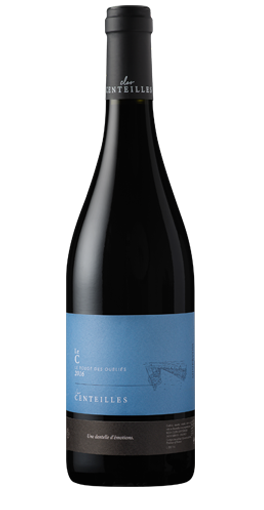


“Le C de Centeilles is a blend of four forgotten grape varieties: Piquepoul Noir, Ribeyrenc Noir, Morastel Noir à jus blanc, and Oeillade. It offers a very refined style, with notes of dried rose and garrigue, and spices that linger on the palate. It has a beautifully silky texture.” (Le Guide RVF 2024)
Buy Centeilles wines at the best prices in a private sale!
Starting at €99 on your first order
Eye
Ruby red with purple highlights
Nose
Complex, with aromas of raspberry, morello cherry, a hint of licorice, Mediterranean scrub, and blood orange
Palate
Full-bodied yet elegant, with a beautiful structure, supple tannins, and lovely fruit, all enhanced by a hint of spice
Serve
At 15-17°C
Drink before
2028

Food and wine pairings
Enjoy it with game birds in a sauce of sour cherries and thyme, or with a cassoulet…


RVF - La Revue du Vin de France / Guide des Meilleurs Vins de France
Wine rated (2024 guide) 92/100
Rated estate (2026 guide) 1*Star (Up-and-coming stars or quality winemakers producing wines of a high standard—you won’t be disappointed when tasting the wines from these estates)
About the wine:
Le C de Centeilles is a blend of four forgotten grape varieties. It offers a very refined style, with notes of dried rose and garrigue, complemented by spices that add depth to the palate. It has a beautifully silky texture.
About the estate:
This unique estate, situated in the picturesque setting of the Siran plateau, is run by Cécile Boyer-Domergue, who is always assisted by her mother, Patricia. Their wines are the result of work carried out with exemplary integrity, focused on cultivating rare or forgotten grape varieties. The fruit expression on the nose is always slightly candied, while on the palate the wines display rare elegance and great finesse of texture, particularly the pure Cinsaults. The top vintages are sold only at their peak. The estate produces a lovely dry white made from forgotten varieties: white Araignan, white and gray Riveyrenc, as well as a raisin-based wine, Erme, in the spirit of the “noble wines” once produced in the Minervois. We must commend the uniqueness and strength of this approach—both viticultural and commemorative—which serves as a vital benchmark, not only for the Minervois but for the entire Languedoc region.