1jour1vin
21799 customer reviews
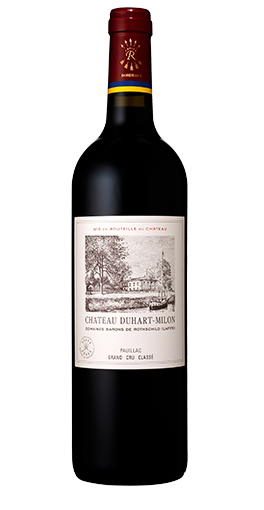
Château Duhart-Milon Pauillac 2011 - Grand Cru Classé

Château Duhart-Milon Pauillac 2011 - Grand Cru Classé

2*Étoiles

Hachette

92/100

Jean-Marc Quarin

92/100

James Suckling

92/100

Le Figaro

92/100

Decanter

92/100

Bettane & Desseauve

intensity
Grand Cru Classé
ready-to-drink
"A dark, intense, and complex color." Very aromatic nose, delicate, fruity, and complex. Hints of ripe fruit. A touch of cedar. Ample on the offensive", smooth on the palate, aromatic, full-bodied, and—above all—with no harsh tannins; the wine lingers on the finish, with a return of the flavors detected on the nose." (Jean-Marc Quarin 2020)

Buy your Duhart-Milon wines at the best price through a private sale!

Rated site
21799 reviews
-20€

Starting at €99 on your first order

Estate

Château Duhart-Milon

Vintage

4ème Grand Cru Classé

Vintage

2011

Designation

Pauillac

Region

Bordeaux

Grape Varieties

75% Cabernet Sauvignon, 25% Merlot

Regions

Soils consisting of fine gravel and wind-blown sand over a Tertiary limestone bedrock

Viticulture

Reasoned

Grape Harvest

Manuals

Wine Production

Traditional

Livestock Farming

14 months in barrels, 50% of which were new

Alcohol content

12,5%

Eye

Intense color with purple hues

Nose

A bouquet dominated by woody notes, with lovely hints of red fruit, tobacco, and spicy notes

Palate

Refined and fresh on the palate. Beautiful structure, body, and length, with a complex, fruit-forward finish.

Serve

At 16-18°C

Open

1 hour before

Drink starting at

2017

Drink before

2030

Food and Wine Pairings

Food and Wine Pairings

Enjoy it with a roast leg of lamb, suckling lamb, or an assortment of cheeses

More information at Château Duhart-Milon

More information at Pauillac

Bettane & Desseauve

Bettane & Desseauve

Wine rated 92/100

Rated estate (2020 guide): 3*Stars (High-quality production that serves as a benchmark in its sector)

About the wine:

A beautiful, balanced, complex cedar aroma, though one would hope for more energy and purity given its classification and terroir.

About the estate:

The Duhart vineyard is located in the heart of Pauillac’s fine terroirs and is comparable in quality to the incomparable Lafite, though its drainage is perhaps slightly less ideal. The blend relies more heavily on Merlot, which better rounds out the very austere tannins that the terroir imparts to the Cabernets. We did not fully detect in the bottled wines the richness and, above all, the purity of the samples tasted en primeur, but the wines clearly possess a distinct Pauillac character. The remarkable 2018 vintage should mark a major milestone in the desired progress.
Decanter

Decanter

Wine rated (2021 guide) 92/100

About the wine:

A Duhart that was particularly reserved in its youth; it continues to develop and will be even better in two or three years. Lots of juiciness, dark fruit, and firm tannins. It’s a wine with so much freshness that it delivers a lovely, mouth-watering finish. The fruit is well-balanced.
Hachette Wine Guide

Guide Hachette des vins

Wine rated (2015 guide) 2* Stars (Outstanding Wine)

Rated estate (2020 guide) Award-winning wines (This producer’s wines regularly receive awards from the guide)

About the wine:

The 2011 vintage contains slightly less Cabernet Sauvignon than that of its illustrious neighbor, Lafite. It shares with Lafite a dark, dense color and a reserved initial nose. Aeration releases sweet spices (cinnamon) and ripe fruit, complemented by notes of old-fashioned rose and graphite. The attack is crisp, fresh, and compact; then the wine becomes more enveloping, rounder, and more generous—almost smooth—while retaining a freshness and real structure, evident in the long, fruity finish. A very well-balanced wine, at once creamy, fresh, and vigorous.

About the estate:

These former lands of the “Prince of the Vineyards,” Nicolas-Alexandre de Ségur (18th century), were long owned by the Castéja family, who gave the cru its name (that of a privateer under Louis XV who settled in Pauillac upon his retirement, whose house now adorns the label). Sold in 1937, fragmented, and in decline, the Duhart-Milon vineyard was purchased in 1962 by the Rothschilds, who restructured and expanded it, restoring its prestige as a 4th growth. The vineyard now covers 76 hectares adjacent to Château Lafite, on the Milon hillside that extends from the Carruades plateau.
Robert Parker - Wine Advocate

Robert Parker - Wine Advocate

Estate rated "Recommended" (Wine producer recommended by Robert Parker—The Wine Advocate)

RVF - La Revue du Vin de France / Guide to the Best Wines of France

RVF - La Revue du Vin de France / Guide des Meilleurs Vins de France

Rated estate (2020 guide) 1*Star (Up-and-coming stars or high-quality winemakers producing wines of a good standard—you won’t be disappointed when you taste the wines from these estates)

About the estate:

Lafite Rothschild’s “little brother” receives the full attention of Éric Kohler and his team. Blessed with a beautiful gravel terroir located in the heart of Pauillac, it long suffered from the young age of its vines. As the years have passed, the estate has now firmly established itself. Producing serious, classic, and very dense wines that age beautifully, Duhart is a sure bet in Pauillac.
Wine Spectator

Wine Spectator

Estate rated "Recommended" (Wine producer recommended by Wine Spectator)

James Suckling

James Suckling

Wine rated (2014 guide) 92/100

About the wine:

The wine is full-bodied and round, with a succulent, juicy structure, silky tannins, and a finish of plum, cocoa, cedar, and berries. This 2011 vintage offers exceptional balance.
Le Figaro Wines

Le Figaro vins

Wine rated (2012 guide) 92/100

About the wine:

Cooler than usual and of moderate body, the Duhart has produced a supple, refined wine with beautiful purity. It should be enjoyed fairly soon.
Jean-Marc Quarin

Jean-Marc Quarin

Wine rated (2020 guide) 92/100

About the wine:

Dark, intense, and well-developed color. A very aromatic, refined, fruity, and deep nose. Hints of ripe fruit. A touch of cedar. Full-bodied on the attack, smooth as it develops, aromatic, with good body, and—most importantly—no harsh tannins; the wine lingers on the finish, with a return of the flavors detected on the nose.

No rating available
Loading...