
21550 customer reviews
Palette


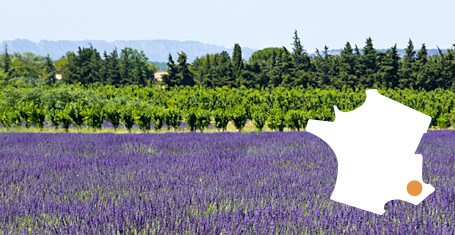
Located very close to Aix-en-Provence, a tiny 23-hectare vineyard produces Palette wines. Across these 23 hectares, a very small number of estates cultivate some 25 different grape varieties to produce exceptional wines. The estate spans part of the municipalities of Meyreuil and Le Tholonet, as well as a small portion of the municipality of Aix-en-Provence. The appellation, recognized by decree on April 28, 1948, owes its name to the hamlet of Palette, located in the center of a cirque of the same name, 4 km east of Aix-en-Provence. Among the appellation’s oldest estates, Château Simone deserves special mention.
The terroir of the Palette appellation lies on the lacustrine limestones of Langesse and Montaiguet. The Palette vineyard is found exclusively on soils made uniform by limestone scree—that is, on thin, stony, skeletal soils. The Palette vineyard is protected from northerly winds by the Langesse and Grand Cabri hills, but via the Arc Valley, it is exposed to west/northwest winds. The predominantly northern exposure almost always necessitates a late harvest.
Palette’s red and rosé wines are made primarily from the Grenache Noir, Mourvèdre, and Cinsault grape varieties. Carignan, Syrah, Manosquin, Durif, Muscat Noir, Cabernet Sauvignon, and Castet are used as secondary grape varieties. For white wines, Clairette yields the best results, complemented by other grape varieties common to the region. Palette’s average production is 1,300 hectoliters, of which approximately 40% is red, 40% is white, and 20% is rosé.
The terroir of the Palette appellation lies on the lacustrine limestones of Langesse and Montaiguet. The Palette vineyard is found exclusively on soils made uniform by limestone scree—that is, on thin, stony, skeletal soils. The Palette vineyard is protected from northerly winds by the Langesse and Grand Cabri hills, but via the Arc Valley, it is exposed to west/northwest winds. The predominantly northern exposure almost always necessitates a late harvest.
Palette’s red and rosé wines are made primarily from the Grenache Noir, Mourvèdre, and Cinsault grape varieties. Carignan, Syrah, Manosquin, Durif, Muscat Noir, Cabernet Sauvignon, and Castet are used as secondary grape varieties. For white wines, Clairette yields the best results, complemented by other grape varieties common to the region. Palette’s average production is 1,300 hectoliters, of which approximately 40% is red, 40% is white, and 20% is rosé.
For more information, visit the website at Palette
Buy the best Palette wines at a private sale!
Rated site21550 reviews
-20€
Starting at €99 on your first order
Discover our selection of the best wine producers in Palette
Our Latest Palette Wine Sales
Château Henri Bonnaud - Palette rosé 2025
Palette|Rosé wine|Organic

More info

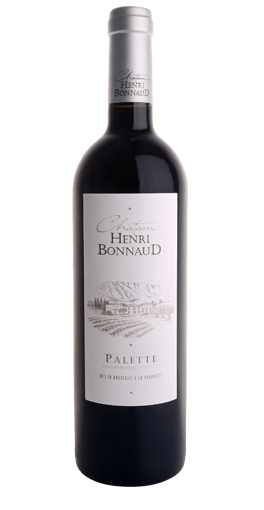
Château Henri Bonnaud - Palette Quintessence rouge 2022
Palette|Red wine|Organic
4.5/5 ( 2020 / 2 reviews)
More info

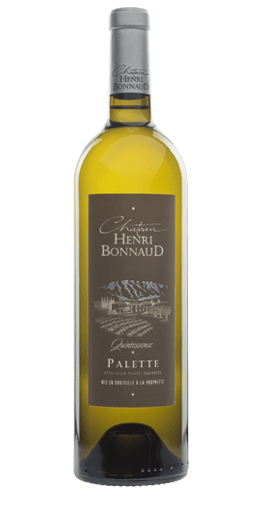
Château Henri Bonnaud - Palette Quintessence blanc 2025
Palette|White wine|Organic

4/5 ( 2024 / 2 reviews)
More info


Loading...