
21550 customer reviews
Coteaux Champenois



The Coteaux Champenois appellation is part of the Champagne appellation; the production area and conditions are the same, but the wines are vinified as still wines. There are both red and white Coteaux Champenois wines, though production remains limited. The most renowned villages feature their names on the label: Bouzy Rouge, Vertus Rouge, etc.
Now world-renowned, the Champagne appellation did not come into being overnight. Its history spans several centuries and is rich in twists and turns. It began with a terroir so unique that it produced the most original wines, thanks to the talent of winemakers who knew how to express its delicate character and enhance it through effervescence. The uniqueness of Champagne wines quickly became renowned. By the early 20th century, Champagne had already attained the status of a legend. The people of Champagne decided to protect it by establishing a strictly defined region and common production rules, which led to the recognition of the Champagne Appellation d’Origine Contrôlée (AOC).
Champagne wines owe their inimitable character to a truly unique terroir, located in a northern geographical position at the northernmost limit of the vine-growing zone. The vineyards thus experience a harsh climate, tempered, however, by an oceanic influence. A predominantly limestone subsoil provides the vines with constant natural irrigation. The hillside location ensures good sun exposure for the vines and allows excess water to drain away.
Since 1935, only three grape varieties have been authorized in Champagne. Pinot Noir imparts red fruit aromas to the wine. It is the grape variety that brings body and power to the blend. Pinot Meunier, a supple and fruity variety, contributes an intense bouquet. It ages more quickly and lends the wine roundness. Chardonnay provides finesse. It imparts floral notes, and its slow maturation makes it an ideal complement to the aging process.
The exceptional reputation of Champagne wines is undoubtedly due as much to the magnificent surprises that “small” producers can reveal as to the excellence of the very large houses, of which we can only provide an incomplete list. While the Dom Pérignon Champagne House leads the way in terms of renown, it does not overshadow others such as Champagne Bollinger, Champagne Charles Heidsieck, Champagne Roederer, Champagne Jacquesson, Champagne Krug, Champagne Billecart-Salmon, Champagne Henriot, Champagne Deutz, Champagne Perrier-Jouët, Champagne Taittinger, Champagne Larmandier-Bernier, Champagne Pol Roger, Champagne Ruinart, and Champagne Jacques Salosse...
Now world-renowned, the Champagne appellation did not come into being overnight. Its history spans several centuries and is rich in twists and turns. It began with a terroir so unique that it produced the most original wines, thanks to the talent of winemakers who knew how to express its delicate character and enhance it through effervescence. The uniqueness of Champagne wines quickly became renowned. By the early 20th century, Champagne had already attained the status of a legend. The people of Champagne decided to protect it by establishing a strictly defined region and common production rules, which led to the recognition of the Champagne Appellation d’Origine Contrôlée (AOC).
Champagne wines owe their inimitable character to a truly unique terroir, located in a northern geographical position at the northernmost limit of the vine-growing zone. The vineyards thus experience a harsh climate, tempered, however, by an oceanic influence. A predominantly limestone subsoil provides the vines with constant natural irrigation. The hillside location ensures good sun exposure for the vines and allows excess water to drain away.
Since 1935, only three grape varieties have been authorized in Champagne. Pinot Noir imparts red fruit aromas to the wine. It is the grape variety that brings body and power to the blend. Pinot Meunier, a supple and fruity variety, contributes an intense bouquet. It ages more quickly and lends the wine roundness. Chardonnay provides finesse. It imparts floral notes, and its slow maturation makes it an ideal complement to the aging process.
The exceptional reputation of Champagne wines is undoubtedly due as much to the magnificent surprises that “small” producers can reveal as to the excellence of the very large houses, of which we can only provide an incomplete list. While the Dom Pérignon Champagne House leads the way in terms of renown, it does not overshadow others such as Champagne Bollinger, Champagne Charles Heidsieck, Champagne Roederer, Champagne Jacquesson, Champagne Krug, Champagne Billecart-Salmon, Champagne Henriot, Champagne Deutz, Champagne Perrier-Jouët, Champagne Taittinger, Champagne Larmandier-Bernier, Champagne Pol Roger, Champagne Ruinart, and Champagne Jacques Salosse...
For more information, visit the website at Coteaux Champenois
Buy the best wines from the Coteaux Champenois at a private sale!
Rated site21550 reviews
-20€
Starting at €99 on your first order
Discover our selection of the best wine producers from the Coteaux Champenois
Our latest sales of wines from the Coteaux Champenois
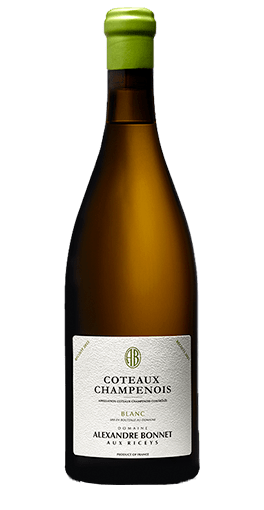
Domaine Alexandre Bonnet - Coteaux Champenois blanc 2022
Coteaux Champenois|White wine

More info

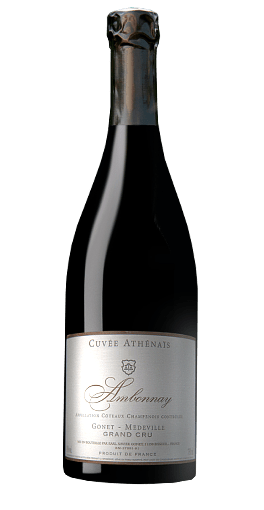
Gonet-Médeville - Coteaux Champenois Ambonnay Cuvée Athénaïs 2015
Coteaux Champenois|Red wine
More info
Gonet-Médeville - Coteaux Champenois Ambonnay Cuvée Athénaïs 2011
Coteaux Champenois Grand cru|Red wine
5/5(1 avis)
More info
Loading...