
21550 customer reviews
Côte de Beaune


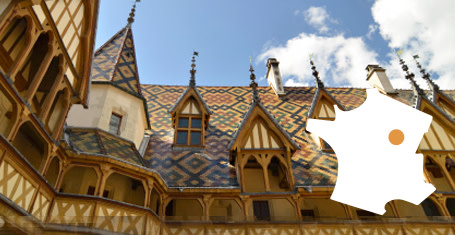
The Côte de Beaune Appellation d’Origine Contrôlée (AOC) is a communal appellation within the Côte de Beaune wine region in Côte-d’Or. This appellation may be followed by the name of the climat from which the wine originates.
The Côte de Beaune AOC is located on the upper slopes of the Montagne de Beaune, on the “balcony” and just above the Premier Crus. At an altitude of 300–370 meters, the soils are brown, calcareous, oolitic, and Rauracian (Jurassic). These soils are highly regarded: one of Burgundy’s experimental vineyards (dedicated to viticultural science) is located at Mont Battois, one of the appellation’s climats.
The Côte de Beaune-Villages appellation is home to white wines made from the Chardonnay grape variety and red wines made from the Pinot Noir grape variety. The reds of the Côte de Beaune are powerful yet rounded; they possess the flattering and iconic aromatic intensity of Pinot Noir, while the whites exhibit the characteristic roundness of Chardonnay.
The Côte de Beaune AOC is located on the upper slopes of the Montagne de Beaune, on the “balcony” and just above the Premier Crus. At an altitude of 300–370 meters, the soils are brown, calcareous, oolitic, and Rauracian (Jurassic). These soils are highly regarded: one of Burgundy’s experimental vineyards (dedicated to viticultural science) is located at Mont Battois, one of the appellation’s climats.
The Côte de Beaune-Villages appellation is home to white wines made from the Chardonnay grape variety and red wines made from the Pinot Noir grape variety. The reds of the Côte de Beaune are powerful yet rounded; they possess the flattering and iconic aromatic intensity of Pinot Noir, while the whites exhibit the characteristic roundness of Chardonnay.
Everything You Need to Know About Côte de Beaune Wine
Spanning the area around the Volnay syncline, the Côte de Beaune AOC covers more than 30 hectares. Compared to the neighboring vineyards of the Côte de Nuits, it features more extensive marl outcrops. Thanks to this distinctive feature, Côte de Beaune wine combines smoothness and elegance. Renowned worldwide, the Côte de Beaune appellation produces approximately 160,000 hectoliters of wine each year.
The Vineyards of the Côte de Beaune
As for the vineyards located in the Côte de Beaune, the Côte de Beaune AOC (Appellation d’Origine Contrôlée) generally covers the high hills of this Burgundian town. At an elevation of between 300 and 370 meters, this terroir benefits from brown soil that is both calcareous and rich in calcium. Located near the Côte de Nuits appellation, this vineyard is characterized by its hilly landscape. Generally, the grapes ripen a few days earlier here.
When it comes to the Côte de Beaune, it’s the great white wines that immediately come to mind. However, it’s worth noting that Pinot Noir and Chardonnay are also produced here. In this region, red wines are the most renowned, accounting for 60% of production. At the far end of this terroir lie two vast hills: Montrachet and Corton. In fact, every bottle bears the name of a prestigious village— Meursault for whites, Pommard for reds, or Beaune and Chassagne-Montrachet for both reds and whites.
Wines produced in the Côte de Beaune
Made from the Chardonnay grape variety, this white wine from the Haute Côte de Beaune is renowned for its pale golden hues. As for the aromas, they combine notes of honey and white flowers, with a flavor reminiscent of gingerbread. Among the white wines, you can find Corton-Charlemagne from the north of Beaune, in the Corton hills, or the Grand Cru Criots-Bâtard-Montrachet, dry wines from the southeastern slopes.
When it comes to red Côte de Beaune wines, there are appellations such as Blagny, Côte-de-Beaune-Villages, Pommard, and Volnay. Each of these AOCs has its own distinctive characteristics, but in general, they are characterized by their color, with some violet or pink hues. It’s worth noting that there are other vineyards that produce both red and white wines, such as the appellations Aloxe-Corton, Auxey-Duresses, Beaune, Chassagne-Montrachet, and Meursault.
Characteristics of the Côte de Beaune appellation
Described as charming wines, the Hautes Côtes de Beaune showcase their candor and spontaneity. In the Beaune region, Pinot Noir—or red wine—dominates the vineyards. For your information, the AOCs are divided into Grand Cru appellations and village appellations. However, there are also regional appellations such as Bourgogne Côte d’Or, Coteaux Bourguignons, and Bourgogne Aligoté. In this region, you can find a total of 29 appellations, including 8 Grand Crus, 7 white wines, and 1 red wine.
To enjoy a classic Burgundy—specifically a Côte de Beaune red wine—it should be paired with a well-balanced meal. It is also ideal as an accompaniment to roasted meats such as veal tenderloin or pork tenderloin. As for the white wine, it pairs well with snails, shellfish, and white fish. If the red wine is a bit older, it should be served at a temperature of 10 to 13 °C.
For more information, visit the website at Côte de Beaune
Buy the best wines from the Côte de Beaune at a private sale!
Rated site21550 reviews
-20€
Starting at €99 on your first order
Discover our selection of the best winemakers from the Côte de Beaune
Our latest sales of wines from the Côte de Beaune
Joseph Drouhin - Côte de Beaune 2022
Côte de Beaune|Red wine

More info

Joseph Drouhin - Côte de Beaune Villages 2022
Côte-de-Beaune-Villages|Red wine
More info

Domaine Emmanuel Giboulot - Côte de Beaune La Grande Châtelaine 2021
Côte de Beaune|White wine|Organic
More info


Loading...