
21558 customer reviews
Burgundy Wines
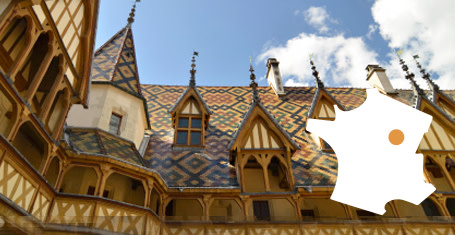
Vineyards are found in the region of Burgundy since ancient times. Their geographic location, at the center of a vast trade network, contributed to the rise of the Burgundy wines. Planted during the Roman era, the vineyards were later cultivated by monks of the Cistercian and Cluniac orders. Burgundy wines owe their reputation to the Dukes of Burgundy. As owners of numerous vineyards, they imposed several restrictions as early as the Middle Ages to ensure the quality of the wine produced.
In 1851, the first wine auction organized by the Hospices de Beaune took place. The first classification of Côte-d’Or wines occurred in 1861. And in 1936, the first Appellation d’Origine Contrôlée (AOC) designation was granted to Morey-Saint-Denis.
Burgundy’s wine-growing region covers an area of 29,500 hectares, 25,000 of which are AOC. It stretches 250 kilometers in length. The wine-growing region is divided into five subregions: Chablis and the Grand Auxerrois (between Auxerre and Chablis), the Côte de Nuits (around Nuits-Saint-Georges), the Côte de Beaune, the Côte Chalonnaise (west of Chalon-sur-Saône), and the Mâconnais (west of Mâcon).
Burgundy wines are highly diverse and are distinguished by their primary grape varieties: Pinot Noir and Gamay for red wines, and Chardonnay and (to a lesser extent) Aligoté for white wines. Burgundy’s continental climate is characterized by cold winters and frequent frosts, even in the spring. As a result, growing grapes there is often challenging. The grape varieties are planted in clay-limestone soils. These climatic and geological characteristics give Burgundy wines their richness and complexity.
Burgundy Wines: Terroir as a Hallmark
Among the world's wine regions, Burgundy is far from the largest in terms of size, but it is now the most sought-after by connoisseurs of prestigious wines. At the heart of this enthusiasm is the terroir, celebrated as nowhere else.Climates: The Foundation of Identity
In Burgundy, the connection to the terroir is embodied in the concept of “climat,” which is unique in the world. A “climat” is a vineyard parcel with its own name, strictly delimited, and whose characteristics are fully known: its exact area, its orientation or degree of sun exposure, and above all, its geologic characteristics, which are incredibly diverse.The Burgundy vineyards are a mosaic of 1,463 climats, shaped over the centuries, which give Burgundy wines—both white and red—their unique character. These climats also form the basis of the classification of the Burgundy wines as we know it today. At the pinnacle of the appellation hierarchy sit 34 climats classified as Grand Cru appellations. The production of wines from these 34 climats accounts for less than 2% of the total production of Burgundy wines. This rarity makes these wines—some of which have become legendary—true treasures.
Single-Varietal Winemaking for Authentic Wines
In Burgundy, the vast majority of wines are produced in single-varietal. If the Chardonnay is currently the most widely grown white grape variety in the world and the Pinot Noir Another very common red grape variety—it’s worth noting that its birthplace is Burgundy. Chardonnay and Pinot Noir, as well as, to a lesser extent, Aligoté for white wines, are what one might call “terroir sponges”—the ideal lens through which to highlight the geological authenticity of the climats.In Chablis, Chardonnay is thus La Chablisienne ’s best ally for expressing the mineral character and freshness provided by a subsoil dominated by gray marl and limestone beds. In the Mâconnais, at the southernmost tip of the region, abundant sunshine and granite soils lend the Chardonnay from the Isabelle and Denis Pommier estate its suppleness and citrus aromas.
In the Côte d'Or, home to the most prestigious climats, the white wines—mostly produced on the Côte de Beaune, between Meursault
and Puligny-Montrachet—take on an opulent character with absolutely unrivaled buttery and brioche notes. The red wines are no exception, and Pinot Noir produces wines with a full, fruity bouquet. Furthermore, if you plan to enjoy seafood—especially scallops—be sure to try the 2017 Vau Ligneau Premier Cru from Domaine de la Motte.
A Hautes-Côtes de Beaune is sure to delight many. As for the Côte de Nuits, it is a kingdom over which Pinot Noir reigns supreme. It is in this part of the vineyard that great winemakers produce truly extraordinary wines from appellations such asVosne-Romanée, Gevrey-Chambertin, and Nuits-St-Georges—to name just a few—which will offer wine lovers truly memorable moments.
Discover all the wineries in the region: Louis Jadot, Huguenot, Croix Montjoie,Faiveley,Bouchard
Père et Fils,Vignerons de Buxy,Terres Secrètes,Stéphane
Brocard,Mercey, Agnès Paquet, Motte, Demougeot, Verget,Clos Solomon
Also discover the other appellations of the Burgundy region: Saint-Véran, Pernand-Vergelesses, Chassagne-Montrachet, Nuits-Saint-Georges, Pouilly-Fuissé, Rully, Chorey-lès-Beaune, Corton-Charlemagne, Aloxe-Corton, Fixin, Saint-Romain, Hautes-Côtes de Nuits, and Givry.
Buy the best Burgundy wines at a private sale!
Rated site21558 reviews
-20€
Starting at €99 on your first order
Discover our selection of the best Burgundy wine producers
Burgundy Wine Appellations
Our Latest Burgundy Wine Sales
Joseph Drouhin - Côte de Beaune 2022
Côte de Beaune|Red wine

More info

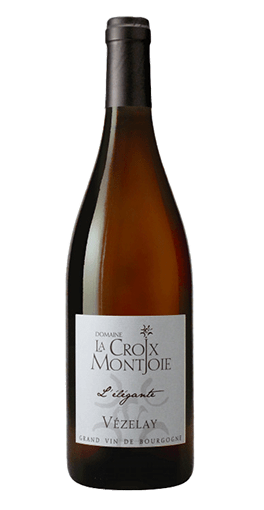
Domaine La Croix Montjoie - Bourgogne Vézelay L'Élégante 2023
Vézelay|White wine|Organic

4.2/5(11 avis)
More info
Domaine Charly Nicolle - Chablis 1er Cru Mont de Milieu Vieilles Vignes 2024
Chablis 1er Cru|White wine
More info

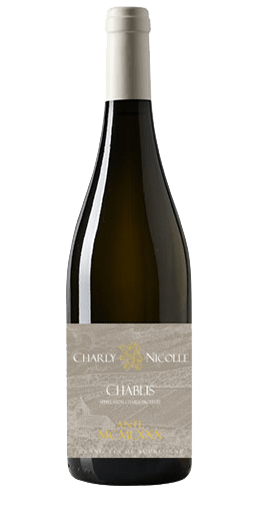
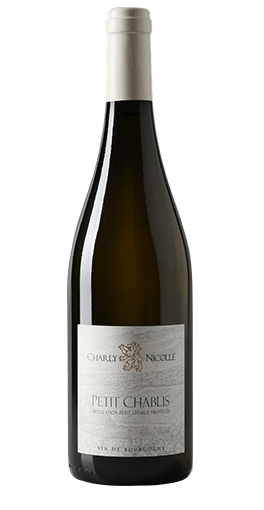
Domaine Charly Nicolle - Petit Chablis 2024
Petit-Chablis|White wine
More info
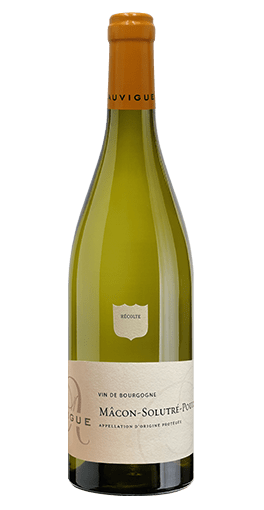
Maison Auvigue - Mâcon Chardonnay 2024
Mâcon|White wine
More info
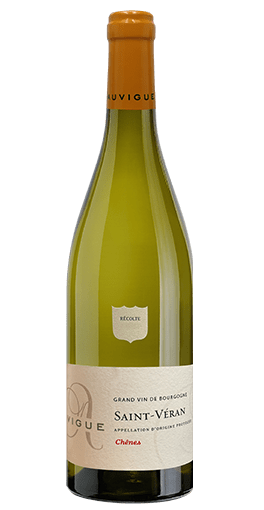
Maison Auvigue - Saint-Véran Les Chênes 2023
Saint-Véran|White wine
More info
Maison Auvigue - Pouilly-Fuissé 1er Cru Clos de Solutré 2022
Pouilly-Fuissé 1er Cru|White wine
More info


Domaine du Mont Épin - Mâcon-Péronne L'Etoile 2023
Mâcon-Péronne|White wine|Organic
4/5 ( 2021 / 3 reviews)
More info

Domaine du Mont Épin - Viré-Clessé Breillonde 2024
Viré-Clessé|White wine|Organic
4.2/5 ( 2023 / 6 reviews)
More info

Bouchard Père & Fils - Beaune du Château 1er Cru blanc Domaine 2022
Beaune 1er Cru|White wine
5/5 ( 2019 / 2 reviews)
More info

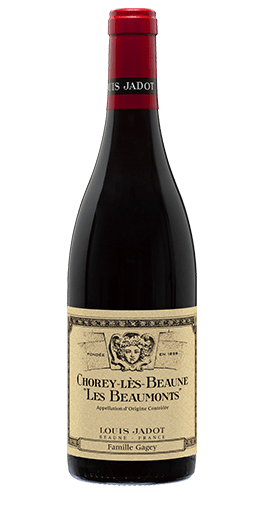
Louis Jadot - Famille Gagey Chorey-lès-Beaune Les Beaumonts 2023
Chorey-lès-Beaune|Red wine
More info
Loading...