
21315 customer reviews
Rosé wine
1. The production of rosé wine
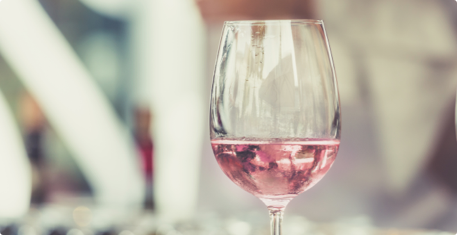
Producing a well-balanced rosé is the result of a delicate process; mastering each stage of production is essential to creating a wine that is both fruity and aromatic, yet free of tannins. It is this balance that accounts for the current popularity of rosé wines, a category that predates both white and red wines. Plot selection is one of the key factors in the success of a rosé vintage.
When the grapes arrive at the winery, they are destemmed (or de-stemmed), meaning the stems are removed. They are then crushed, that is, lightly pressed to release the juice.
There are two options: maceration (or bleeding) and direct pressing, with the latter technique being used more and more often for modern rosés.
For maceration, the must obtained from crushing and destemming—that is, a mixture of solid and liquid components—is placed in a vat. The maceration period lasts only a few hours at low temperature. It is, in fact, the careful control of this maceration period that allows for the production of a wine with character, without acquiring the tannins typical of red wine, which are derived from the same grape varieties. The pigments present in the grape skin give the juice its rosy hue. The juice is then extracted by pressing or by using so-called technical vats that allow for significant extraction of the liquid portion of the must. Rosé wines produced through maceration have a deep color.
Direct pressing is currently more in line with the preferences of consumers who prefer lighter-colored wines with a lively palate. It involves sending the grapes that arrive at the winery directly to the press after destemming them.
The juice obtained either through direct pressing or short maceration is then transferred to a settling tank to be clarified. The particles in the juice settle to the bottom of the tank, and this "lees" is then separated from the juice. It will then proceed to the stage of alcoholic fermentation. This is followed by a relatively short aging period during which the clarified and stabilized wine undergoes a number of processes designed to enhance its qualities.
2. Red wine and white wine do not make rosé wine
The common misconception that rosé wine is made by mixing red and white wine is, fortunately, now dismissed by the vast majority of consumers. However, under pressure from certain industry players, the European Union had adopted a draft regulation authorizing the use of the name “rosé wine” for such blends, as is the practice in South Africa and Australia. Most of the European winemakers affected fiercely opposed such a solution in order to preserve the quality and reputation of a wine whose quality they have worked tirelessly to improve for over a decade. It is clear that the “rosés” produced in this way are merely low-quality products designed to offload subpar wine through this more festive presentation. Such regulations are no longer relevant today.
It is worth noting, however, that the main exception to this prohibition on blending concerns Champagne. Indeed, it is possible to blend Chardonnay with Pinot Noir or Pinot Meunier to produce rosé Champagne. However, the resulting blend undergoes a new fermentation phase specific to Champagne, meaning that rosé Champagne is not simply a blend of finished products, but a wine produced through a specific process.
3. Grape Varieties, Regions, and Famous Rosé Wines
The grape varieties used for rosé wine are the same as those used for red wine. It has been observed that the pink color of the wine does not come from a specific type of grape, but rather from how it is processed in the winery. In Provence, the major rosé-producing region, the varieties most commonly used include Tibouren, Carignan, Grenache Noir, Cinsault, Syrah, and Mourvèdre.
Three-quarters of France’s rosé production is concentrated in the Provence region, notably in leading appellations such as Bandol and Coteaux d’Aix-en-Provence. Certain estates really put this region on the map, such as Château d’Esclans, Château Pibarnon, Domaine d’Ott, and Château Bellet.
Corsica also produces high-quality rosé wines. Although less well known for this style, other major French wine regions offer appellation-designated rosé wines of remarkable quality. This is true of the Bordeaux region, the Loire Valley (including Anjou), and the Rhône Valley (including Tavel).
4. Rosé wine and food pairings
Rosé wine is often a festive choice that can be enjoyed chilled as an aperitif or with cold or hot appetizers. It also pairs well with a main course or grilled dishes. However, some more complex rosés can be paired with fish such as red mullet or more elaborate dishes.
Producing a well-balanced rosé is the result of a delicate process; mastering each stage of production is essential to creating a wine that is both fruity and aromatic, yet free of tannins. It is this balance that accounts for the current popularity of rosé wines, a category that predates both white and red wines. Plot selection is one of the key factors in the success of a rosé vintage.
When the grapes arrive at the winery, they are destemmed (or de-stemmed), meaning the stems are removed. They are then crushed, that is, lightly pressed to release the juice.
There are two options: maceration (or bleeding) and direct pressing, with the latter technique being used more and more often for modern rosés.
For maceration, the must obtained from crushing and destemming—that is, a mixture of solid and liquid components—is placed in a vat. The maceration period lasts only a few hours at low temperature. It is, in fact, the careful control of this maceration period that allows for the production of a wine with character, without acquiring the tannins typical of red wine, which are derived from the same grape varieties. The pigments present in the grape skin give the juice its rosy hue. The juice is then extracted by pressing or by using so-called technical vats that allow for significant extraction of the liquid portion of the must. Rosé wines produced through maceration have a deep color.
Direct pressing is currently more in line with the preferences of consumers who prefer lighter-colored wines with a lively palate. It involves sending the grapes that arrive at the winery directly to the press after destemming them.
The juice obtained either through direct pressing or short maceration is then transferred to a settling tank to be clarified. The particles in the juice settle to the bottom of the tank, and this "lees" is then separated from the juice. It will then proceed to the stage of alcoholic fermentation. This is followed by a relatively short aging period during which the clarified and stabilized wine undergoes a number of processes designed to enhance its qualities.
2. Red wine and white wine do not make rosé wine
The common misconception that rosé wine is made by mixing red and white wine is, fortunately, now dismissed by the vast majority of consumers. However, under pressure from certain industry players, the European Union had adopted a draft regulation authorizing the use of the name “rosé wine” for such blends, as is the practice in South Africa and Australia. Most of the European winemakers affected fiercely opposed such a solution in order to preserve the quality and reputation of a wine whose quality they have worked tirelessly to improve for over a decade. It is clear that the “rosés” produced in this way are merely low-quality products designed to offload subpar wine through this more festive presentation. Such regulations are no longer relevant today.
It is worth noting, however, that the main exception to this prohibition on blending concerns Champagne. Indeed, it is possible to blend Chardonnay with Pinot Noir or Pinot Meunier to produce rosé Champagne. However, the resulting blend undergoes a new fermentation phase specific to Champagne, meaning that rosé Champagne is not simply a blend of finished products, but a wine produced through a specific process.
3. Grape Varieties, Regions, and Famous Rosé Wines
The grape varieties used for rosé wine are the same as those used for red wine. It has been observed that the pink color of the wine does not come from a specific type of grape, but rather from how it is processed in the winery. In Provence, the major rosé-producing region, the varieties most commonly used include Tibouren, Carignan, Grenache Noir, Cinsault, Syrah, and Mourvèdre.
Three-quarters of France’s rosé production is concentrated in the Provence region, notably in leading appellations such as Bandol and Coteaux d’Aix-en-Provence. Certain estates really put this region on the map, such as Château d’Esclans, Château Pibarnon, Domaine d’Ott, and Château Bellet.
Corsica also produces high-quality rosé wines. Although less well known for this style, other major French wine regions offer appellation-designated rosé wines of remarkable quality. This is true of the Bordeaux region, the Loire Valley (including Anjou), and the Rhône Valley (including Tavel).
4. Rosé wine and food pairings
Rosé wine is often a festive choice that can be enjoyed chilled as an aperitif or with cold or hot appetizers. It also pairs well with a main course or grilled dishes. However, some more complex rosés can be paired with fish such as red mullet or more elaborate dishes.
Buy the best rosé wines at a private sale!
Rated site21315 reviews
-20€
Starting at €99 on your first order
Rosé wines recently featured in a private sale on 1jour1vin
Domaine de La Verde - Royal Sunset 2024
Vacqueyras|Rosé wine

More info

Domaine de Poulvarel - Costières de Nîmes rosé 2025
Costières de Nîmes|Rosé wine|Organic
More info

Château Calissanne - Coteaux d'Aix-en-Provence rosé 2025
Coteaux d'Aix-en-Provence|Rosé wine
More info


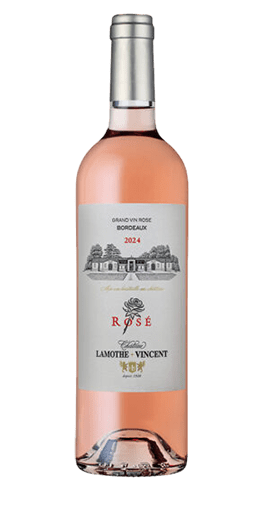
Château de Fontcreuse - Cassis Cuvée F. rosé 2025
Cassis|Rosé wine|Organic
More info

Miraval - Côtes de Provence rosé 2025
Côtes de Provence|Rosé wine
More info

Jasci - Cerasuolo d'Abruzzo 2025
Cerasuolo d'Abruzzo|Rosé wine|Organic
More info

Domaine Maby - Tavel La Forcadière 2025
Tavel|Rosé wine|Organic
More info

Terres Plurielles - Côtes Catalanes Le Cirque rosé 2025
Côtes Catalanes|Rosé wine
More info


Loading...