
21550 customer reviews
Monthelie

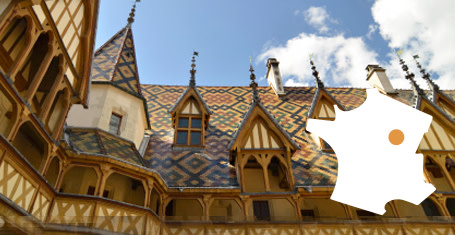
Monthélie belongs to the Village Appellations category of the Côte de Beaune wine region in Côte-d'Or and encompasses 15 distinct climats recognized as Premier Cru. Wines labeled Monthélie or Monthélie Premier Cru may or may not specify the specific climat from which they originate. The Monthélie terroir benefits from a predominantly south and southeast exposure, with its vineyards rooted in Bathonian gravelly limestone soil, overlaid with a layer of red clay and marl. This terroir stretches along the Volnay slope as well as within the Auxey-Duresses valley, where the Argovian limestone substrate and the east or west orientation vary depending on the slope, at an altitude ranging from 230 to 370 meters. Produced within this AOC, the red wines are made exclusively from Pinot Noir, while the white wines are made from the Chardonnay grape variety.
History of the Monthélie AOC Vineyard
Located in the heart of the Burgundy vineyards, within the Côte de Beaune region, the Monthélie AOC covers an area of 130 hectares, of which 110 hectares are dedicated to red wine grape cultivation and 18 hectares to white wine grape cultivation. Monthélie, a village nestled between Volnay and Meursault, is distinguished by two main appellations: Monthélie and Monthélie Premier Cru.
The Terroir of Monthélie
The soils of the Monthélie vineyards, primarily composed of white, slightly calcareous earth, are well-suited for red wine production. The vines benefit from a south and southeast exposure, situated at an altitude of around 300 meters. In Burgundy, the temperate climate promotes the harmonious development of the grape varieties. The Monthélie AOC wine region, though modest at 130 hectares, is home to a variety of estates of varying sizes. Monthélie wines are sold well beyond the region’s borders.
Profile of Monthélie
Pinot Noir accounts for the bulk of wine production in the Monthélie AOC. This demanding grape variety requires meticulous care to reach full maturity. The harvest, carried out both by hand and mechanically, is followed by aging in barrels for 12 to 24 months. Monthélie’s white wines are also produced using both manual and mechanical methods. The Monthélie vineyard produces approximately 5,000 hectoliters annually, with yields ranging from 50 to 58 hectoliters per hectare for reds and from 57 to 64 hectoliters per hectare for whites. Monthelie red is distinguished by its brilliant ruby color and aromas of red and black fruits, such as cherry and blackcurrant, enriched with floral notes like violet and peony, evolving toward hints of undergrowth, fern, and spices with age. Its structure, both firm and velvety, is built on delicate tannins, giving it an elegance often compared to that of Volnay wines. As for the white Monthelie, it boasts a golden color, evoking aromas of white flowers, Reinette apples, and fresh hazelnuts, with a smooth palate balanced by a lively acidity. Monthélie wines pair wonderfully with food; the red is an ideal match for meats—particularly poultry and lamb—and should be served at 15°C, while the white, which pairs well with fish or cheese, should be served at 12°C.
For more information, visit the website at Monthelie
Buy the best Monthelie wines at a private sale!
Rated site21550 reviews
-20€
Starting at €99 on your first order
Discover our selection of the best Monthelie wine producers
Our latest sales of Monthelie wines
Bouchard Père & Fils - Monthélie 1er Cru Les Duresses Domaine 2021
Monthélie 1er Cru|Red wine

4.5/5(2 avis)

More info


Maison Louis Latour - Monthelie 2020
Monthelie|Red wine
More info


Domaine Faiveley - Monthélie 1er Cru Les Champs Fulliots 2010
Monthélie 1er Cru|Red wine
More info

Loading...