
21550 customer reviews
Crémant d'Alsace

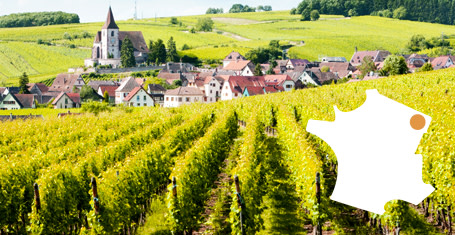
The Crémant d’Alsace AOC certifies sparkling wines from Alsace. As early as the late 19th century, several Alsatian wineries were producing sparkling wines using the traditional method. This tradition, which waned during the first half of the 20th century, was preserved until the Crémant d’Alsace AOC was officially recognized by the decree of August 24, 1976. This decree provided Alsatian wineries with the new framework necessary to produce high-quality sparkling wine according to standards comparable to those applied by Champagne producers themselves. Today, more than 500 producers are members of the Syndicat des Producteurs de vin Crémant d’Alsace(Crémant d’Alsace Producers’ Association), among which the Domaine Léon Boesch, the Domaine Julien Meyer, and the Domaine Valentin Zusslin are particularly noteworthy.
Lively and delicate, Crémant d’Alsace is produced through a second fermentation, primarily from Pinot Blanc, but also from Pinot Gris, Pinot Noir, Riesling, or Chardonnay. These grape varieties are generally harvested at the very beginning of the harvest season, an ideal time when the grapes offer the best balance and finest harmony for winemaking. Thanks to its unique character and impeccable quality, Crémant d’Alsace has become the top A.O.C. sparkling wine consumed at home in France. It also enjoys considerable success abroad. Crémant d’Alsace owes its finesse and originality to the inimitable character of each of the Alsatian grape varieties used in its production and to the exceptional conditions enjoyed by its vineyards: a dry, sunny climate, hillsides facing the rising sun, and unique geological features.
Most Crémant d’Alsace “blanc de blancs” wines are made from Pinot Blanc, which gives them delicacy and suppleness; Riesling imparts lively, fruity notes to the Crémant, full of elegance and nobility; Pinot Gris brings richness and structure to the Crémant; Chardonnay lends the Crémant distinction and lightness; and finally, Pinot Noir is the only grape variety used to produce Crémant d’Alsace rosé—and, more rarely, “blancs de noirs,” which are full of charm and finesse.
Lively and delicate, Crémant d’Alsace is produced through a second fermentation, primarily from Pinot Blanc, but also from Pinot Gris, Pinot Noir, Riesling, or Chardonnay. These grape varieties are generally harvested at the very beginning of the harvest season, an ideal time when the grapes offer the best balance and finest harmony for winemaking. Thanks to its unique character and impeccable quality, Crémant d’Alsace has become the top A.O.C. sparkling wine consumed at home in France. It also enjoys considerable success abroad. Crémant d’Alsace owes its finesse and originality to the inimitable character of each of the Alsatian grape varieties used in its production and to the exceptional conditions enjoyed by its vineyards: a dry, sunny climate, hillsides facing the rising sun, and unique geological features.
Most Crémant d’Alsace “blanc de blancs” wines are made from Pinot Blanc, which gives them delicacy and suppleness; Riesling imparts lively, fruity notes to the Crémant, full of elegance and nobility; Pinot Gris brings richness and structure to the Crémant; Chardonnay lends the Crémant distinction and lightness; and finally, Pinot Noir is the only grape variety used to produce Crémant d’Alsace rosé—and, more rarely, “blancs de noirs,” which are full of charm and finesse.
For more information, visit the website at Crémant d'Alsace
Buy the best Crémant d'Alsace wines at a private sale!
Rated site21550 reviews
-20€
Starting at €99 on your first order
Discover our selection of the best producers of Crémant d'Alsace wines
Our latest sales of Crémant d'Alsace wines

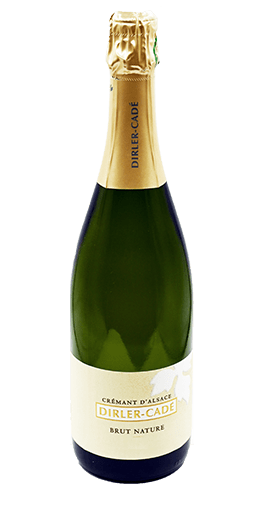
Domaine Dirler-Cadé Crémant d'Alsace Brut Nature 2019
Crémant d'Alsace|Sparkling wine|Organic

More info

Domaine Rieflé-Landmann - Crémant d'Alsace Brut Formula
Crémant d'Alsace|Sparkling wine|Organic

3/5(7 avis)
More info

Léon Boesch - Crémant d'Alsace Zéro Extra-Brut 2012
Crémant d'Alsace|Sparkling wine|Organic

4.7/5(3 avis)
More info


Loading...