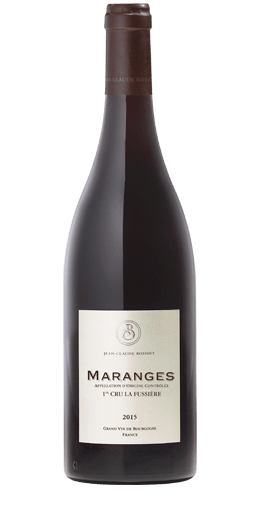
Maranges

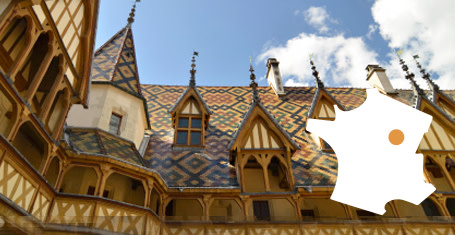
The Maranges and Maranges Premier Cru Appellation d'Origine Contrôlée (AOC) is one of the newest in the Côte de Beaune. Maranges wines were granted this appellation in 1989. It covers the municipalities of Cheilly-lès-Maranges, Sampigny-lès-Maranges, and Dezize-lès-Maranges in Saône-et-Loire.
The 162 hectares of vineyards consist primarily of Pinot Noir (157 ha), more than half of which are classified as Premiers Crus. There are seven such vineyards: La Fuissière, Le Clos des Rois, Le Clos de la Boutière, Le Clos des Loyères, Les Clos Roussots, Le Clos de la Loyère, and La Croix aux Moines.
The Maranges and Maranges Premier Cru appellations produce red wines made from the Pinot Noir grape variety and, to a lesser extent, white wines made from 100% Chardonnay—two of Burgundy’s flagship grape varieties.
Maranges Wine: A Burgundy in Its Own Right
The three municipalities are located in the Cozanne Valley, a tributary of the Saône, south of the Côte de Beaune. The valley shares its origins and geological characteristics with this wine-growing region. That is why the wines of Maranges were once classified as "Côte-de-Beaune-Villages". Cheilly, Sampigny, and Dezize are the only communes in the Côte de Beaune that belong to the Saône-et-Loire department. There, the terrain is more rolling than in the neighboring Côte-d’Or, and the slopes face south or southeast. The vineyards are planted at altitudes ranging from 200 to 400 meters, on well-drained soils composed of calcareous marl and stony scree at the base of the hillsides. However, the soil in Cheilly-lès-Marange is lighter and gravelly, producing soft wines. In Sampigny and Dezize, where the soils are brown limestone and marl-limestone, the wines are firmer and more structured. The winemakers have thus highlighted the unique characteristics of this terroir to be able to group their production under the same A.O.C., the most recent in the entire Côte de Beaune.Typical Burgundian grape varieties
The two main grape varieties used to make Maranges wines are emblematic of the Burgundy region. The Pinot Noir grape variety, which thrives particularly well on these hillsides, dominates the vineyard. While Maranges wines are primarily red, there is also a small production of white wines, made exclusively from Chardonnay. The Maranges appellation thus comprises more than 180 hectares of vineyards. More than half of the grapes harvested are used to produce Maranges 1er Cru. Seven “climats”—as the specific vineyard sites dedicated to viticulture in Burgundy are known—share this distinction: Clos de la Boutière, Clos des Loyères, Clos de la Loyère, Clos des Rois, Clos Roussots, Croix des Moines, and La Huissière.Maranges: Powerful, Rich-Colored Wines
Maranges red wine has a beautiful ruby color, sometimes darker, with a hint of purple. The nose reveals aromas of strawberry and raspberry, followed by floral notes of violet. On the palate, it is fresh and full-bodied, with spicy notes of pepper. This still wine is best enjoyed at 16°C and pairs perfectly with braised meats. Its acidity allows for several years of aging. Maranges 1er Cru wines have a more assertive character. They offer notes of wild berries, orange peel, honeysuckle, and prunes. They age longer and are wonderful after three to five years of aging. The best vintages can be cellared for about fifteen years before being enjoyed. White Maranges, ideal as an aperitif or with fish, has a pale straw color, sometimes with hints of emerald green. On the palate, it has a floral character and offers a fresh bouquet of hawthorn and acacia. Over the years, it develops aromas of flint and honey.Buy the best Maranges wines at a private sale!
Starting at €99 on your first order
Discover our selection of the best Maranges wine producers
Our latest Maranges wine sales


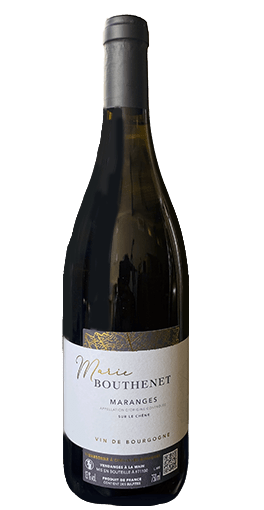

Albert Bichot - Maranges 1er Cru Clos Roussot rouge 2022

More info


Maison Louis Latour - Maranges 2020
More info

Domaine Bertrand Bachelet - Maranges 1er cru La Fuissière 2018

4.5/5(2 avis)
More info