
21550 customer reviews
Banyuls

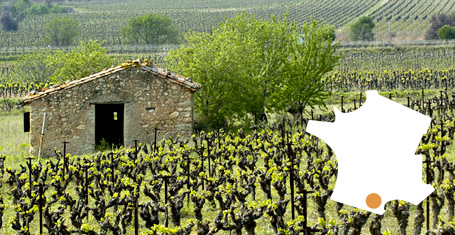
The typical Banyuls vineyard is perched on the steep terraces of the Pyrenees, which plunge into the Mediterranean at the French-Spanish border. The 1,300 hectares of vineyards span the municipalities of Banyuls-sur-Mer, Collioure, Port-Vendres, and Cerbère. Production is divided between Banyuls, at 9,500 hectoliters, and Banyuls Grand Cru, at approximately 3,500 hectoliters. The terroir rests on gray Cambrian schist soils; the vines are planted on steep slopes or on very narrow terraces held in place by low stone walls facing the sea. The grape varieties used are White Grenache and Gray Grenache for the whites, and Red Grenache and Gray Grenache for the reds.
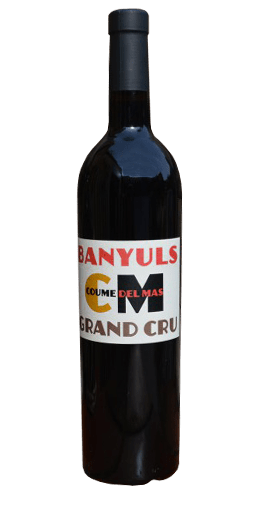
Banyuls wines are vinified through direct pressing or maceration and are aged in bottles, large casks, barrels, demi-muids, or glass demijohns. They evolve over time to offer a wide range of colors and highly varied aromas, in sweet, semi-sweet, or dry styles. Some even possess the famous “rancio” notes—those very distinctive aromas that can only be produced by long and patient aging in an oxidative environment. These characteristics can be found in certain vintages offered by Domaine de la Rectorie, Domaine Coume del Mas, or Domaine du Mas Blanc.
There are several types of Banyuls wines. The “traditional” Banyuls, the most common and symbols of the great tradition, are brick-red wines aged in an oxidative environment for many years. "Rimage" or "Vintage" Banyuls, produced only in great vintages: these are wines with long maceration and extraction, fortified on the grape skins. To preserve their fruit, freshness, and power, they are bottled quickly (6 to 12 months after the harvest). Produced using the same principle as the previous wines, Banyuls “Rimage” or “Vintage” Mise Tardive are aged for one to three years in large casks or topped-up barrels to round out the tannins and refine the aromas, which then acquire fabulous complexity. Finally, there is white Banyuls, with its bright straw-yellow color and floral notes intermingled with citrus and white fruits. Traditionally, the best vintages are aged to produce “golden” Banyuls, also known as “amber” Banyuls.
Banyuls wines are vinified through direct pressing or maceration and are aged in bottles, large casks, barrels, demi-muids, or glass demijohns. They evolve over time to offer a wide range of colors and highly varied aromas, in sweet, semi-sweet, or dry styles. Some even possess the famous “rancio” notes—those very distinctive aromas that can only be produced by long and patient aging in an oxidative environment. These characteristics can be found in certain vintages offered by Domaine de la Rectorie, Domaine Coume del Mas, or Domaine du Mas Blanc.
There are several types of Banyuls wines. The “traditional” Banyuls, the most common and symbols of the great tradition, are brick-red wines aged in an oxidative environment for many years. "Rimage" or "Vintage" Banyuls, produced only in great vintages: these are wines with long maceration and extraction, fortified on the grape skins. To preserve their fruit, freshness, and power, they are bottled quickly (6 to 12 months after the harvest). Produced using the same principle as the previous wines, Banyuls “Rimage” or “Vintage” Mise Tardive are aged for one to three years in large casks or topped-up barrels to round out the tannins and refine the aromas, which then acquire fabulous complexity. Finally, there is white Banyuls, with its bright straw-yellow color and floral notes intermingled with citrus and white fruits. Traditionally, the best vintages are aged to produce “golden” Banyuls, also known as “amber” Banyuls.
For more information, visit the website at Banyuls
Buy the best Banyuls wines at a private sale!
Rated site21550 reviews
-20€
Starting at €99 on your first order
Discover our selection of the best Banyuls wine producers
Our latest sales of Banyuls wines
Domaine de la Rectorie - Banyuls blanc Elisabeth 2025
Banyuls|White wine

More info

Coume del Mas - Banyuls Escoumes blanc 2024 (50cl)
Banyuls|White wine
More info
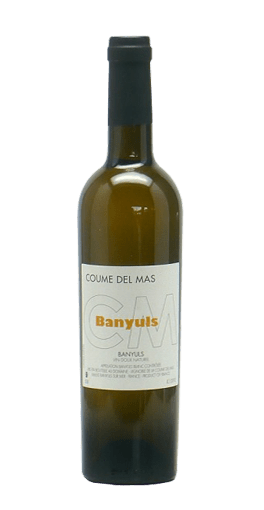
Coume del Mas - Banuyls Galateo 2024 (50 cl)
Banyuls|Red wine
More info

Pietri-Geraud - Banyuls Cuvée Méditerranée 2018
Banyuls|Red wine
More info

Domaine de la Rectorie - Banyuls Léon Parcé 2023
Banyuls|Red wine
More info







Loading...