
21550 customer reviews
Médoc

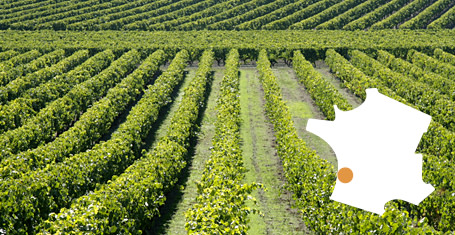
Medoc Wine: A Tradition of Excellence
This region is located on the left bank of the Gironde River, more specifically where, to the north, it meets the Atlantic Ocean, forming a peninsula—or, more broadly, between Bordeaux and the tip of the peninsula. A north-south distinction is sometimes made (“Bas-Médoc/Haut-Médoc”), with the northern part of the region regarded as a land of historic prestige, and which historically was the only area to bear the designation “Médoc.” A further distinction is made between the Landes du Médoc—the inland region—and the coastal wine-growing Médoc, where the essence of Médoc wine is produced. The “Médoc” AOC thus covers 5,800 hectares, and viticulture there is a thriving and historic industry: up to 285,000 hectoliters of Médoc red wine are produced there each year.
The Médoc appellation encompasses the three main soil types of the Médoc: Garonne gravel, Pyrenean gravel, and clay-limestone soils. Given the appellation’s vast size, these terroirs are characterized by extreme diversity. The wines are primarily made from Merlot Noir and Cabernet Sauvignon grapes, supplemented in smaller proportions by Cabernet Franc, Carmenère, Petit Verdot, Cot, or Malbec.
A Heritage Wine
The Médoc has, in fact, been a wine-producing region since Roman times, when it was already known throughout the Empire for its trade in wine and amber. The Middle Ages contributed to its prominence as a religious and cultural pilgrimage route—a welcoming and prosperous land traversed by travelers on their way to Santiago de Compostela, who never failed to savor its ever-famous wine. This golden age reached its peak in the 18th and 19th centuries, which saw the emergence of wines that have remained legendary ever since: Château Labadie and Château Lafitte (the Haut-Médoc and fine wine are a perfect match!) caused quite a stir at the 1855 World’s Fair. Other great wines that have emerged since then include those from Château de By and the Poitevin vineyards, which rival in quality the wines that have left their mark on history.
A region dotted with Gallo-Roman vineyards—testaments to a rich economic past—the Médoc experienced a resurgence in the 1960s thanks to immigrants from North Africa. At that time, a few returnees settled on vineyard lands that had been left fallow in the wake of major financial crises. Armed with unwavering determination, they instilled a renewed sense of enthusiasm in the people of the Médoc and revitalized part of the wine-growing region through new cultivation methods and winemaking techniques. The Médoc Appellation d’Origine Contrôlée (AOC), granted by a decree dated November 14, 1936, is today the largest in the Médoc region.
If we stick strictly to the regulations, the eight defined appellations of the Médoc region (from the Jalle de Blanquefort to the north of the Bordeaux metropolitan area, extending almost to the Pointe de Grave) are eligible for the Médoc appellation. However, the Médoc also encompasses a specific territory located in the northern part of the peninsula, which produces exclusively wines under this appellation. In practice, the vast majority of Médoc wines come from the northern part of the peninsula. Among these various wines, Château d’Escurac, Château Haut-Maurac, and Château La Tour de By are particularly noteworthy.
The Reasons Behind Excellence
A great wine never comes about by chance, but generally through a combination of ideal geographical and weather conditions and unique expertise. This is certainly true in this case, as the Médoc enjoys a highly advantageous geographical location that also benefits the wines of Bordeaux, the neighboring major city. The climate of southern France is one of the best in the world for growing grapes: abundant sunshine, moderate humidity—yet sufficient for the healthy growth of many plants—long, hot summers, and a milder September are all essential elements for the healthy development of the grapes, which will absorb flavors throughout the warm season without perishing from excessive heat.
The Médoc also boasts exceptional subsoil—noted and admired as far back as antiquity—consisting of gravelly ridges well-suited to viticulture. This subsoil has since been further optimized through the draining of certain marshes and the work of winegrowers over the past 2,000 years, who have nourished and tended this fertile land with the aim of continually improving the quality of the wines. The result is a unique and surprising flavor profile: intense tannins that emerge within the framework of a balanced and structured wine—defined primarily by its power yet nonetheless full-bodied. These wines refine over 5 to 10 years to avoid a youthful character that can make them too tannic. It should be noted, however, that the Médoc also produces wines from clay-limestone soils with a different character: fine, elegant, and subtle, they can—unlike their gravelly counterparts—be enjoyed even when young.
For more information, visit the website at Médoc
Buy the best Médoc wines at a private sale!
Rated site21550 reviews
-20€
Starting at €99 on your first order
Discover our selection of the best wine producers in the Médoc
Our latest sales of Médoc wines
Château Potensac - Médoc 2025 (Primeurs)
Médoc|Red wine

More info

Clos Manou - Médoc 2022
Médoc|Red wine
More info


G d'Estournel Médoc 2022 - 3ème vin
Médoc|Red wine
More info

Petit Manou - Médoc 2018
Médoc|Red wine
More info




Loading...