
21550 customer reviews
Touraine


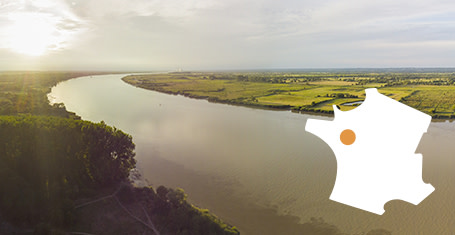
The proximity of waterways played an important role in the growth of the Touraine wine region, as rivers and streams served as transportation routes that facilitated exports. This development reached its peak in the 19th century; by then, Touraine had been one of the capital’s leading wine suppliers for a century. After a period of crisis that lasted until World War II, Touraine definitively shifted its focus toward quality wines. The Touraine Appellation d’Origine Contrôlée (AOC), granted by a decree dated December 24, 1939, extends its appellation area from the borders of Anjou to the outskirts of Sologne, in a confluence zone formed by the Loire and its tributaries, spanning 104 communes in Indre-et-Loire and 42 in Loir-et-Cher. Most of the vineyards are located southeast of Tours, on the hillsides overlooking the Cher River and between the Cher and the Loire.
The soil types are highly varied, including “perruches” (flint-rich clay), “aubuis” (clay-limestone on a chalky subsoil), and sandy clay in the eastern part; as well as light gravel and faluns (sand)... The climate is maritime in the west and gradually takes on a continental character as one moves eastward. These climatic differences, combined with the varied soils, determine the choice of grape varieties (generally late-ripening in the west and early-ripening in the east) and thus the wide variety of wines. With 4,400 hectares of vineyards, annual production totals 240,000 hectoliters, of which approximately 38% is red, 42% white, 12% sparkling, and 8% rosé. Red Touraine wines are made from Gamay (more than 60% of the harvest), Cabernet Franc, Côt, Cabernet Sauvignon, Pineau d’Aunis, and Pinot Noir. White Touraine wines are made from Sauvignon (nearly 80%), Chenin Blanc, and, to a lesser extent, Chardonnay.
Touraine wines are aromatic. Chenin Blanc is primarily used for sparkling wines, where it expresses delicate notes of brioche, green apple, and honey. Gamay, often produced as a single-varietal wine, yields light, straightforward wines with characteristic red fruit aromas. Blended wines combine this youthful, fresh character with the structure of other grape varieties. Classic blends produce fresh, delicate rosés: Pineau d’Aunis yields a rosé with character and a unique spicy note. Most Touraine wines reach their peak within two years. Full-bodied reds age well after three to four years of aging. Among the many producers in Touraine, notable ones include Domaine Albane and Bertrand Minchin, Domaine Henry and Jean-Sebastien Marionnet, and Domaine Charles Joguet.
The soil types are highly varied, including “perruches” (flint-rich clay), “aubuis” (clay-limestone on a chalky subsoil), and sandy clay in the eastern part; as well as light gravel and faluns (sand)... The climate is maritime in the west and gradually takes on a continental character as one moves eastward. These climatic differences, combined with the varied soils, determine the choice of grape varieties (generally late-ripening in the west and early-ripening in the east) and thus the wide variety of wines. With 4,400 hectares of vineyards, annual production totals 240,000 hectoliters, of which approximately 38% is red, 42% white, 12% sparkling, and 8% rosé. Red Touraine wines are made from Gamay (more than 60% of the harvest), Cabernet Franc, Côt, Cabernet Sauvignon, Pineau d’Aunis, and Pinot Noir. White Touraine wines are made from Sauvignon (nearly 80%), Chenin Blanc, and, to a lesser extent, Chardonnay.
Touraine wines are aromatic. Chenin Blanc is primarily used for sparkling wines, where it expresses delicate notes of brioche, green apple, and honey. Gamay, often produced as a single-varietal wine, yields light, straightforward wines with characteristic red fruit aromas. Blended wines combine this youthful, fresh character with the structure of other grape varieties. Classic blends produce fresh, delicate rosés: Pineau d’Aunis yields a rosé with character and a unique spicy note. Most Touraine wines reach their peak within two years. Full-bodied reds age well after three to four years of aging. Among the many producers in Touraine, notable ones include Domaine Albane and Bertrand Minchin, Domaine Henry and Jean-Sebastien Marionnet, and Domaine Charles Joguet.
For more information, visit the website at Touraine
Buy the best Touraine wines at a private sale!
Rated site21550 reviews
-20€
Starting at €99 on your first order
Discover our selection of the best Touraine wine producers
Our latest sales of Touraine wines


La Grange Tiphaine - Touraine Amboise Les Ormeaux blanc 2023
Touraine-Amboise|White wine|Organic

More info

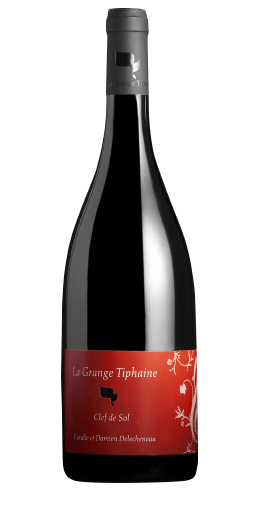


La Grange Tiphaine - Touraine Amboise Côt Vieilles Vignes 2021
Touraine-Amboise|Red wine|Organic
2/5(2 avis)
More info


Loading...