
21550 customer reviews
Moulin-à-Vent

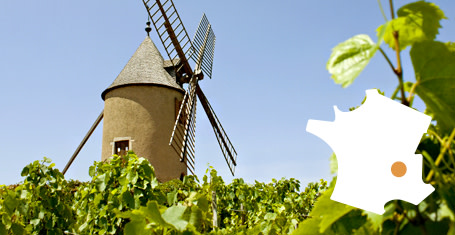
The Moulin-à-Vent appellation covers only two municipalities: Romanèche-Thorins in Saône-et-Loire and Chénas in the Rhône. The decree recognizing the appellation was issued on September 11, 1936, but as early as 1924, the Mâcon court—tasked with resolving disputes arising from the counterfeiting of an already renowned wine—had defined the geographical boundaries of the cru and, in doing so, had in a sense marked the birth of the Moulin-à-Vent appellation, more than 10 years before the law establishing the A.O.C.s
The Moulin-à-Vent vineyard covers approximately 670 hectares, with an annual production of about 36,500 hectoliters. The only grape variety used is black-skinned, white-juiced Gamay, which produces exclusively red wine. Among the producers, particular mention should be made of Domaine des Terres Dorées, Domaine Dominique Piron, Domaine du Vissoux, and especially Domaine Paul Janin et Fils as well as Château des Jacques.
The terroir of Moulin-à-Vent is characterized by crumbly pink granite sand known as “gore,” interspersed here and there with veins of manganese. This mineral is one of the appellation’s distinctive features. Wine is made from whole clusters. This method is unique to the Beaujolais region. After being placed in vats and undergoing primary alcoholic fermentation, the grapes are pressed. The free-run juice and press juice are then blended before undergoing a second, malolactic fermentation. This process softens the wines by reducing their acidity. To extract the maximum amount of flavor compounds and give Moulin-à-Vent wines structure, many winemakers use techniques that involve submerging the grapes in the juice during fermentation: racking, punching down, délestage, or pumping over. Well-structured, some Moulin-à-Vent wines may be aged in barrels to produce oak-aged cuvées, allowing the winemaker to broaden the range of wines they offer.
The Moulin-à-Vent vineyard covers approximately 670 hectares, with an annual production of about 36,500 hectoliters. The only grape variety used is black-skinned, white-juiced Gamay, which produces exclusively red wine. Among the producers, particular mention should be made of Domaine des Terres Dorées, Domaine Dominique Piron, Domaine du Vissoux, and especially Domaine Paul Janin et Fils as well as Château des Jacques.
The terroir of Moulin-à-Vent is characterized by crumbly pink granite sand known as “gore,” interspersed here and there with veins of manganese. This mineral is one of the appellation’s distinctive features. Wine is made from whole clusters. This method is unique to the Beaujolais region. After being placed in vats and undergoing primary alcoholic fermentation, the grapes are pressed. The free-run juice and press juice are then blended before undergoing a second, malolactic fermentation. This process softens the wines by reducing their acidity. To extract the maximum amount of flavor compounds and give Moulin-à-Vent wines structure, many winemakers use techniques that involve submerging the grapes in the juice during fermentation: racking, punching down, délestage, or pumping over. Well-structured, some Moulin-à-Vent wines may be aged in barrels to produce oak-aged cuvées, allowing the winemaker to broaden the range of wines they offer.
Windmill, the King of Beaujolais Wines
Moulin-à-Vent is one of the 10 municipal appellations of the Beaujolais region. Unlike the other nine appellations, which are named after the villages where they are produced, the Moulin-à-Vent Beaujolais AOC is unique in that it is named after its emblem—an old mill located in the town of Romanèche-Thorins. But that’s not its only unique feature. Among the Beaujolais wines, Moulin-à-Vent also stands out on the palate.
Granitic soil that produces a great wine
Straddling the municipalities of Romanèche-Thorins, in Saône-et-Loire, and Chénas, in the Rhône department, the Moulin à Vent appellation is often described as “the lord of the Beaujolais appellations.” This is due to its weathered granite soil—or “rotten granite”—commonly called “gore” by winemakers. This soil, while generally poor, is nevertheless richer in organic matter than the soils of the Fleurie or Chiroubles hillsides, for example. Furthermore, its porosity ensures an ideal water supply: neither too much nor too little. The vines planted in this appellation area thus draw from the soil all the elements essential to their growth.
The Moulin-à-Vent vineyard also benefits from the most favorable altitudes, exposures, and slopes among the 10 crus.
The result is full-bodied, robust wines with greater aging potential than other vintages.
When and how should you enjoy a Moulin à Vent?
To properly enjoy a Moulin-à-Vent wine such as the Moulin-à-Vent Croix des Louves, you need to be patient. Unlike Beaujolais and Beaujolais-Village AOC wines, which are meant to be enjoyed young, Moulin-à-Vent wine—like Morgon and Chénas—has an aging potential of 3 to 10 years, and sometimes even longer for the best vintages.
Like the finest wines, it deserves the best storage conditions. You should therefore pay close attention to the temperature, light, and humidity in the cellar where you’ll store your bottles while you wait for the right occasion to enjoy them. If you cannot provide ideal storage conditions for your finest bottles, it’s better to buy wines that are ready to drink—ones that have been stored under proper conditions, either at the winery or at a wine shop.
"Le Moulin à Vent" red wine should be enjoyed at room temperature. This means it should be served at a temperature between 15 and 18 degrees (cellar temperature). In hot weather, it is therefore best to keep the wine at this temperature by placing it in an ice bucket.
This wine is the perfect accompaniment to red meats, game, and strong-flavored cheeses such as Camembert, Époisses, or Munster. In fact, its robust and full-bodied character pairs exceptionally well with and brilliantly complements rich, home-style dishes.
Organoleptic Characteristics of Moulin-à-Vent
Le Moulin-à-Vent is a wine that gets its purplish-red color from the Gamay grape variety from which it is made.
On the nose, it initially releases a fruity aroma reminiscent of cherries or blackcurrants. After a few years of aging, its bouquet becomes spicier and reveals notes of musk, truffle, and forest floor.
It is on the palate that the Moulin-à-Vent reveals its true character. Powerful, full-bodied, and velvety, it offers refined, woody tannins and aromas typical of Gamay that develop and blossom over time.
For more information, visit the website at Moulin-à-Vent
Buy the best Moulin-à-Vent wines at a private sale!
Rated site21550 reviews
-20€
Starting at €99 on your first order
Discover our selection of the best Moulin-à-Vent wine producers
Our latest sales of Moulin-à-Vent wines
Domaine de La Presle - Moulin-à-Vent Au Michelon 2024
Moulin-à-Vent|Red wine

More info

Domaine Labruyère - Moulin-à-Vent Champ de Cour 2022
Moulin-à-Vent|Red wine
More info
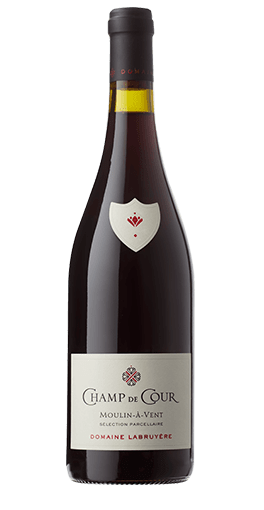
Domaine Labruyère - Moulin-à-Vent Coeur de Terroirs 2021
Moulin-à-Vent|Red wine
More info

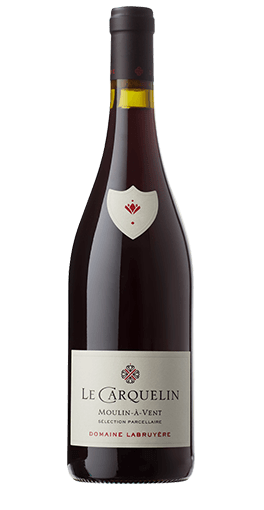


Domaine Anita - Moulin-à-Vent La Rochelle 2023 (Magnum)
Moulin-à-Vent|Red wine
More info

Château Bonnet - Moulin-à-Vent Le Petit Brennay 2023
Moulin-à-Vent|Red wine
More info

Château des Jacques - Moulin-à-Vent 2023
Moulin-à-Vent|Red wine
More info
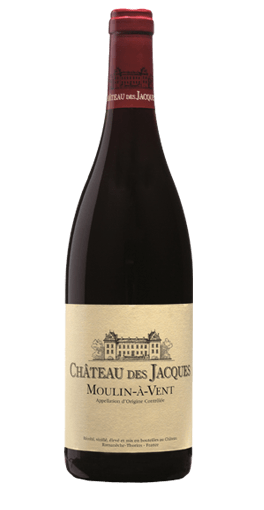
Domaines Chermette - Moulin-à-Vent Les Trois Roches 2024
Moulin-à-Vent|Red wine
4.2/5 ( 2023 / 5 reviews)
More info


Domaine Anita - Moulin-à-Vent La Rochelle 2024
Moulin-à-Vent|Red wine
More info
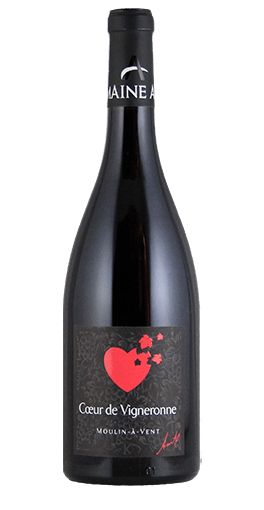
Domaine Anita - Moulin-à-Vent Cœur de Vigneronne 2024
Moulin-à-Vent|Red wine
More info


Loading...