
21550 customer reviews
Moulis-en-Médoc

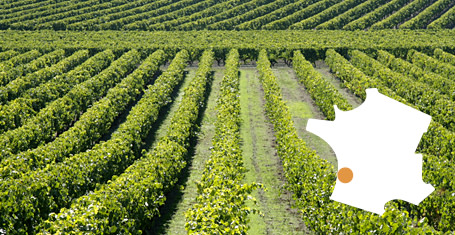
Moulis-en-Médoc is the smallest municipal appellation in the Médoc in terms of area alone. Its vineyards cover 600 hectares, representing 4% of the total Médoc vineyard area. The terroirs of Moulis-en-Médoc consist, from east to west, of a vast mass of Garonne gravel that is particularly well-suited to growing Cabernet Sauvignon. This gravel shares the same lithological composition as that found in the Grands Crus Classés. At the center of the Moulis-en-Médoc appellation lies a clay-limestone soil that is highly favorable to Merlot; further west, a terroir formed of Pyrenean gravel emerges, possessing the qualities necessary for the perfect development of the two aforementioned grape varieties.
Blended primarily from Cabernet Sauvignon and Merlot, Moulis-en-Médoc wines combine finesse, power, and complexity, offering bouquets of rare richness. These are harmonious and elegant wines, sometimes quite full-bodied, but always with a rounded mouthfeel and well-integrated tannins that give them a very pleasant smoothness. Moulis-en-Médoc wines possess exceptional aging potential. Estates such as Château Chasse-Spleen, Château Brillette, Château Maucaillou, and Château Poujeaux are thus worthy representatives of the terroir.
Planté de vignes since the 13th century, Moulis-en-Médoc owes its name to the numerous mills that once existed in the town. Nestled among pine trees, it is sheltered from prevailing winds, creating a microclimate conducive to the grapes’ full ripening. The soils consist of gravelly terraces interspersed with loamy or limestone areas, creating an alternation of light, warm soils and cooler, deeper ones. The production specifications for Moulis-en-Médoc are particularly stringent and allow for an average annual production of only about 28,500 hectoliters.
Blended primarily from Cabernet Sauvignon and Merlot, Moulis-en-Médoc wines combine finesse, power, and complexity, offering bouquets of rare richness. These are harmonious and elegant wines, sometimes quite full-bodied, but always with a rounded mouthfeel and well-integrated tannins that give them a very pleasant smoothness. Moulis-en-Médoc wines possess exceptional aging potential. Estates such as Château Chasse-Spleen, Château Brillette, Château Maucaillou, and Château Poujeaux are thus worthy representatives of the terroir.
Planté de vignes since the 13th century, Moulis-en-Médoc owes its name to the numerous mills that once existed in the town. Nestled among pine trees, it is sheltered from prevailing winds, creating a microclimate conducive to the grapes’ full ripening. The soils consist of gravelly terraces interspersed with loamy or limestone areas, creating an alternation of light, warm soils and cooler, deeper ones. The production specifications for Moulis-en-Médoc are particularly stringent and allow for an average annual production of only about 28,500 hectoliters.
The Moulins-en-Médoc vineyard: small in size but great in wines
Château Chasse-Spleen, Château Brillette, Maucaillou Castle or Château Poujeaux—all names inextricably linked to remarkable Bordeaux wines from Moulis. Yet the Moulis-en-Médoc vineyard, from which they originate, accounts for only 4% of the vast Médoc wine region. This underscores the importance we should place on the wines produced in this small terroir, which stretches 7 km from east to west and covers a total of 610 hectares.The Wines of Moulis-en-Médoc: A Time-Honored Tradition
With a history dating back to the Middle Ages—making it one of the oldest vineyards in the Médoc—vine cultivation replaced an earlier tradition of rye farming. At that time, there were many mills, and it was these that gave Moulis-en-Médoc its name, since “mill” is “molinis” in Latin. It was the monks who mastered the water management system of the “jalles”—small streams flowing directly over the ground as they sought a path to the river, forming a marsh. Gradually, the millers disappeared and were replaced by winegrowers.The Moulis-en-Médoc terroir: the essence of the Médoc
The long history of winemaking in Moulis-en-Médoc explains its location to the west of the Médoc region—and thus far from the river, whose moisture was once feared because of the rot it caused in the harvests. Today, while the river no longer exerts its influence, this location is ideal for allowing the grapes to reach optimal ripeness. Between the Garonne gravel soils to the east and the Pyrenean gravel soils to the west lies, in the center, a clay-limestone soil that is highly conducive to the flourishing of the Merlot grape variety. It is not one but three terroirs that make up the terroir of Moulis-en-Médoc, making it, in a sense, a microcosm of the entire Médoc region.Merlot, the hallmark of Moulis wines
The equal blend of Merlot and Cabernet Sauvignon is a defining characteristic of Moulis wines. Merlot imparts suppleness, roundness, and richness to these wines, while Cabernet Sauvignon contributes finesse, tannic structure, and aging potential. The complexity of the wines is enhanced by the presence, in smaller quantities, of Petit Verdot, Cabernet Franc, and Malbec. Although it is found less frequently, Carmenère is also included in the blends of Moulis-en-Médoc wines.The wines of Moulis-en-Médoc: an AOC that guarantees great wines
Although there are no Cru Classé wines in the Moulis-en-Médoc AOC—making it the only municipal AOC in this situation—some châteaux, in the opinion of experts, deserve to be classified as such. This lack of recognition, however, is most certainly a boon for consumers. Nevertheless, many wines bear the Cru Bourgeois or Cru Artisan designations. About fifty winegrowers are active in the region, producing approximately 30,000 hl of wine each year that combines finesse and power, with notes of red fruit and a broad aromatic profile.For more information, visit the website at Moulis-en-Médoc
Buy the best wines from Moulis-en-Médoc at a private sale!
Rated site21550 reviews
-20€
Starting at €99 on your first order
Discover our selection of the best wine producers in Moulis-en-Médoc
Our latest sales of wines from Moulis-en-Médoc

Château Maucaillou - Moulis-en-Médoc 2025 (Primeurs)
Moulis-en-Médoc|Red wine

More info

Château Poujeaux - Moulis-en-Médoc 2025 (Primeurs)
Moulis-en-Médoc|Red wine
More info
Château Chasse-Spleen - Moulis-en-Médoc 2025 (Primeurs)
Moulis-en-Médoc|Red wine
More info


Les Éclats de Branas Branas Grand Poujeaux Moulis 2019 - Second vin
Moulis-en-Médoc|Red wine
3.8/5(4 avis)
More info

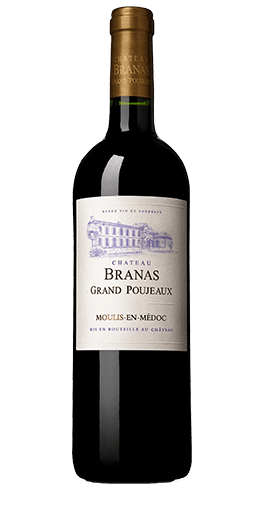
Château Branas Grand Poujeaux Moulis 2019
Moulis-en-Médoc|Red wine
More info

Loading...