
20846 customer reviews
Lirac

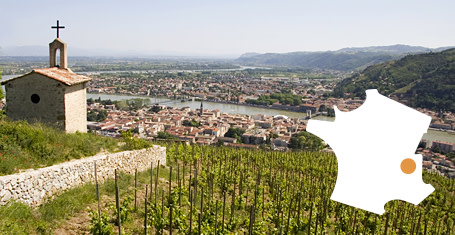
With a long-standing reputation, Lirac wines have brought prosperity to the region. Over the centuries, the port of Roquemaure became powerful and prosperous. It was from here that the wines of the "Côte du Rhône" were shipped to Paris, England, and Holland. The local appellation for Lirac wines was obtained by decree in 1947.
Laid out in terraces and hillsides, the Lirac vineyard nestles on the right bank of the Rhône, facing the Châteauneuf-du-Pape vineyard. Located in the south of the Rhône Valley, it covers an area of 1,200 hectares in the heart of the Gard scrubland and Roman ruins. It thus occupies a large area covering four communes: Lirac, Roquemaure, Saint-Laurent-des-Arbres, and Saint-Geniès-de-Comolas. The area planted with vines suitable for producing AOC Lirac currently covers 747 hectares, with an annual production of around 19,500 hectoliters.
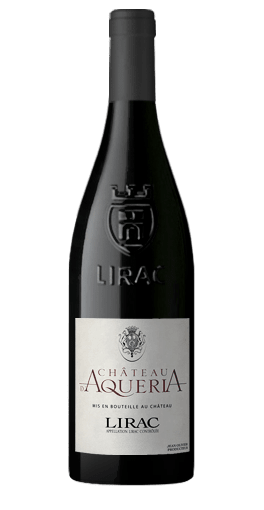
A distinctive feature of the terroir, Lirac is the oldest Côtes du Rhône appellation to produce all three colors: red, rosé, and white. This uniqueness is due to the diversity of soils and grape varieties found within the appellation. The red and rosé Lirac wines are mainly made from Grenache Noir, Cinsault, Syrah, and Mourvèdre. For white Lirac, Clairette is used, but above all Bourboulenc and Grenache blanc. Wine lovers will be rewarded for their curiosity in this appellation by the wines produced by Château d'Aquéria, as well as those offered by Domaine Maby and Domaine de la Mordorée.
Lirac: a wine of terroir
Lirac AOC wines, made from multiple grape varieties
Lirac red wine is made from Grenache Noir, Syrah, Mourvèdre, and Cinsault grapes, which give it a deep ruby to garnet red color.
Lirac red has a nose reminiscent of wild berries, spices, and garrigue. Aged red wines develop notes of leather, cocoa, and licorice. Red Lirac is balanced on the palate, with appreciable tannic power, while retaining a roundness characteristic of Lirac. Red Lirac ages well and improves with time.
The rosé has a salmon color derived from Grenache Noir, Syrah, and Cinsault grapes, giving it surprising notes of red fruits, raspberry, and strawberry. Although smooth, Lirac rosés remain dynamic, with a long finish, leaving a freshness and pronounced taste after tasting.
Finally, white Lirac wines are made from Bourboulenc, Clairette, Grenache Blanc, and Roussanne grapes, sometimes with the addition of Marsanne, Picpoul, and Viognier. These grape varieties give the white wine a bright color and a bouquet reminiscent of summer fruits and floral notes. As they age, Lirac white wines develop notes of honey and thyme.
Tastes and dishes adapted
Red wines: When young, red wines offer aromas of red and black fruits on the nose, which evolve with age towards vanilla, leather, and hints of undergrowth. On the palate, Lirac wines are powerful and generous, while maintaining a beautiful balance. Thanks to their excellent aging potential, these wines can be enjoyed over several years.
Ideal with• Red meats (beef, game, lamb)
Rosé wines: The nose reveals aromas of red fruits, strawberries, and almonds. On the palate, you will be seduced by the wine's beautiful aromatic intensity and freshness.
Ideal with• Shellfish• Oily fish (salmon, tuna) • Pork• Poultry
A distinctive feature of the terroir, Lirac is the oldest Côtes du Rhône appellation to produce all three colors: red, rosé, and white. This uniqueness is due to the diversity of soils and grape varieties found within the appellation. The red and rosé Lirac wines are mainly made from Grenache Noir, Cinsault, Syrah, and Mourvèdre. For white Lirac, Clairette is used, but above all Bourboulenc and Grenache blanc. Wine lovers will be rewarded for their curiosity in this appellation by the wines produced by Château d'Aquéria, as well as those offered by Domaine Maby and Domaine de la Mordorée.
Lirac: a wine of terroir
Planted in the middle of the garrigue, on arid, sun-drenched land exposed to the mistral wind, the Lirac vineyard derives its distinctive character from this location. The Lirac vineyard's land is composed of three types of soil: rounded pebbles, limestone scree, and sand dating from the late Tertiary period. The blend of grapes planted on these different soils produces wines with complex aromas and colors.
Lirac AOC wines, made from multiple grape varieties
Produced from different terroirs, Lirac wines are characterized by their power and aromas, yet remain fresh and elegant. Originally, the Lirac vineyard was mainly known for its rosés, but today it produces around 20,000 hectoliters per year of red, rosé, and white wines. It is also the first Côtes du Rhône appellation to produce wines of three colors.
Lirac red wine is made from Grenache Noir, Syrah, Mourvèdre, and Cinsault grapes, which give it a deep ruby to garnet red color.
Lirac red has a nose reminiscent of wild berries, spices, and garrigue. Aged red wines develop notes of leather, cocoa, and licorice. Red Lirac is balanced on the palate, with appreciable tannic power, while retaining a roundness characteristic of Lirac. Red Lirac ages well and improves with time.
The rosé has a salmon color derived from Grenache Noir, Syrah, and Cinsault grapes, giving it surprising notes of red fruits, raspberry, and strawberry. Although smooth, Lirac rosés remain dynamic, with a long finish, leaving a freshness and pronounced taste after tasting.
Finally, white Lirac wines are made from Bourboulenc, Clairette, Grenache Blanc, and Roussanne grapes, sometimes with the addition of Marsanne, Picpoul, and Viognier. These grape varieties give the white wine a bright color and a bouquet reminiscent of summer fruits and floral notes. As they age, Lirac white wines develop notes of honey and thyme.
Tastes and dishes adapted
We recommend pairing charcuterie, duck, poultry, lamb, or cheese with a red Lirac. White Lirac pairs perfectly with raw vegetables, asparagus, fish, or seafood. Finally, red meat, offal, white fish, dishes with sauce, and summer fruits pair wonderfully with Lirac rosé.
Red wines: When young, red wines offer aromas of red and black fruits on the nose, which evolve with age towards vanilla, leather, and hints of undergrowth. On the palate, Lirac wines are powerful and generous, while maintaining a beautiful balance. Thanks to their excellent aging potential, these wines can be enjoyed over several years.
Ideal with• Red meats (beef, game, lamb)
Rosé wines: The nose reveals aromas of red fruits, strawberries, and almonds. On the palate, you will be seduced by the wine's beautiful aromatic intensity and freshness.
Ideal with• Shellfish• Oily fish (salmon, tuna) • Pork• Poultry
White wines: They reveal notes of white fruits and flowers on the nose. Also benefiting from good aging potential, these wines will offer notes of vanilla and honey over time.
Ideal with• Oily fish (salmon, tuna)• Mature hard cheese• Poultry
More information on the website of Lirac
Buy the best Lirac wines in a private sale!
Rated site20846 reviews
-20€
from €99 on your first order
Discover our selection of the best Lirac wine producers
Our latest Lirac wine sales
Domaine de la Mordorée - Lirac La Reine des Bois rouge 2022
Lirac|Red wine|Organic

More info

Domaine de la Mordorée - Lirac La Reine des Bois blanc 2024
Lirac|White wine|Organic
More info

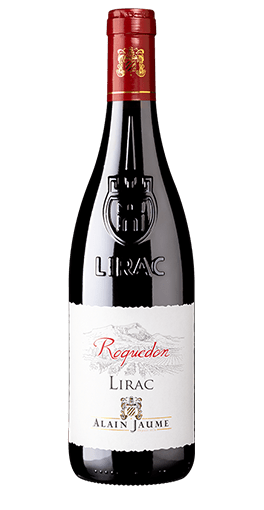
Alain Jaume - Lirac Roquedon 2023
Lirac|Red wine
More info
Domaine Maby - Lirac La Fermade rouge 2022
Lirac|Red wine|Organic
More info






Loading...