
21550 customer reviews
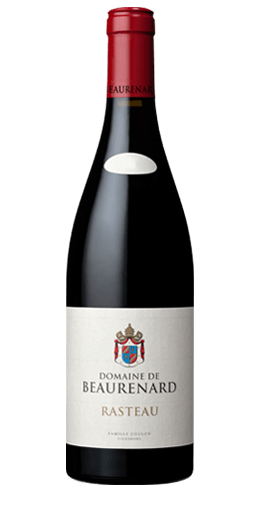
Rasteau

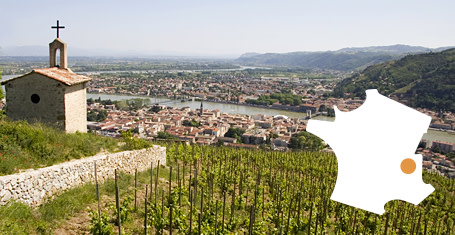
Enjoy the taste and high quality of Rasteau wine
A wine with a Protected Designation of Origin (AOC), Rasteau takes its name from the town of Rasteau, located in the Vaucluse department. This wine was granted AOC status in 1944 as a naturally sweet wine and, in 2010, as a dry red wine. The Rasteau AOC vineyards are nestled against the foothills of the Baronnies mountain range. The vines can grow at altitudes of up to 300 meters and are well protected. The old Grenache vines, a truly exceptional feature, are situated on the slopes. They are primarily suited to the production of this sweet wine.
Driven by economic necessity, the Côtes du Rhône Villages gradually established themselves thanks to the formal recognition of the appellation, and the terroirs were specifically designated—as in this case—in 1965 with the granting of the Côtes du Rhône Villages Rasteau appellation. The vineyard currently covers most of the land in the village of Rasteau, in the northern part of the Vaucluse department.
The soils in Rasteau are predominantly clay-limestone. The climate is Mediterranean, with the south-facing slopes offering some protection from the mistral. The vineyard area is approximately 1,000 hectares, with an annual production of about 34,000 hectoliters.
For red Rasteau wines, the blend consists of at least 50% Grenache and at least 20% Syrah and/or Mourvèdre, with the other grape varieties of the appellation permitted up to a maximum of 20%. For Rasteau rosés, the proportions are the same; however, white grape varieties (Grenache, Clairette, Marsanne, Roussanne, Bourboulenc, and Viognier) must not exceed 20% of the blend. The grape varieties used for white Rasteau wines are primarily white Grenache, white Clairette, white Marsanne, white Roussanne, white Bourboulenc, and white Viognier, supplemented by other varieties that must remain a very small part of the blend.
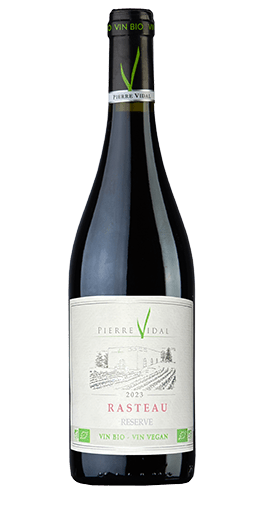
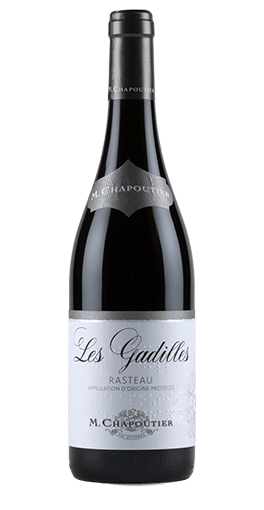
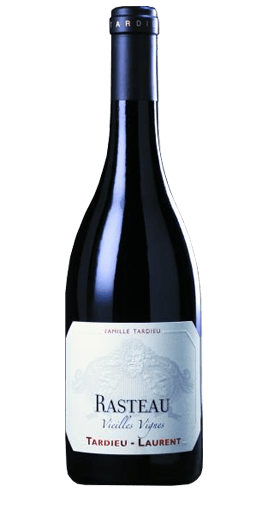
Among the wines produced in this appellation, the Rasteau wines from Domaine de la Saumade, Maison M. Chapoutier, and Domaine Tardieu Laurent are particularly noteworthy.
Rasteau: Where does it come from, and how is it produced?
As for its production, Rasteau is made by adding wine alcohol to the fermenting must. This traditional process tends to enhance the natural aromas of Grenache in order to better preserve the sugars. The Mediterranean climate of the Côtes-du-Rhône-Village region, along with the mistral wind, promotes the over-ripening of the grapes. Similarly, the soils in this growing region are sandy-clay in texture. Depending on the aging method—whether oxidative or air-tight—Rasteau comes in several colors and even different designations. Rasteau wine is also available in several styles to offer consumers a variety of experiences. You can choose from garnet, hors d’âge, rosé, white, rancio, or tuilé.
Learn about the main characteristics of Rasteau wine
Rich and full-bodied, this type of wine is sure to delight the taste buds and all the senses. First, Rasteau or Grenat red wine has a deep color. In most cases, its aroma is reminiscent of red fruits, such as blackberries or cherries. As for its taste, Grenat Rasteau can feature notes of red fruit or spices. In addition, white Rasteau wine is distinguished by its golden color. It often features notes of candied or dried fruit. Rather smooth and full-bodied, it can be savored with hints of candied fruit, currants, or other dried fruits. Finally, amber Rasteau is easily recognizable by its coppery hues. Depending on your preferences, you can choose a more amber-hued variety with hints of garrigue, a touch of caramel, or honey. On the palate, this smooth wine reveals notes of coffee, toasted almonds, or mild spices. So make your choice based on color, depth, and price.
What should you pair with the best Rasteau wines?
Be sure to choose the best food-and-wine pairings for a true explosion of flavors on the palate. So, if you have a soft spot for red wine, know that Rasteau wine can be enjoyed with appetizers, aperitifs, or other regional dishes. Wild boar terrine, lentils with bacon, or garlic steak are all excellent choices. As for white Rasteau wines, they pair perfectly with a blue cheese soufflé, Fourme d’Ambert, or a Tarte Tropézienne.
For more information, visit the website at Rasteau
Buy the best Rasteau wines at a private sale!
Rated site21550 reviews
-20€
Starting at €99 on your first order
Discover our selection of the best Rasteau wine producers







Loading...