
21550 customer reviews
Wines from Corsica

Corsican wines, the fruits of a beautiful vineyard
Developed by the Greeks in the 6th century B.C. and later by the Romans, Corsica’s vineyards are incredibly rich and produce a wine well worth discovering. Aleria wine had thus already gained renown in Greek cities and later throughout the Roman Empire. The success of the wines from Corsica In the Mediterranean basin, the subsequent expansion of vineyards characterized the following periods up until the second half of the 19th century. Powdery mildew, phylloxera, and then the world wars completed the commercial decline of Corsican viticulture. It was not until the 1950s, therefore, that Corsican viticulture began to flourish again, drawing on a rich history, expertise, and terroir that ensured the quality of its wines.Covering nearly 8,000 hectares, Corsica’s vineyards are spread along the island’s entire coastline and boast nine appellations d’origine contrôlée, among which the wines of Figari, Ajaccio, and Patrimonio stand out in particular.
Among the most commonly used grape varieties—most of which are native to Corsica—are Niellucciu, Sciaccarellu, Aléatico, and Barbarossa for red and rosé wines, and Vermentinu and Bianco Gentile for white wines.
Geography and Characteristics of Corsican Wines
Corsica enjoys unparalleled sunshine in France, even in winter, while benefiting from the cool sea breeze, microclimates throughout the valleys, and a good balance that helps prevent vine diseases and water stress. Corsican vineyards cover more than 8,000 hectares, divided into one regional appellation, “Vins de Corse”; two “cru” appellations, “Ajaccio” and “Patrimonio”; five village appellations—“Corse Calvi,” “Corse Coteaux du Cap Corse,” “Corse Figari,” “Corse Porto-Vecchio,” and “Corse Sartene”; and one “Vin Doux Naturel” (VDN) appellation. Muscat from Cap Corse. The island's soils consist of limestone in the north and south, granite in the west, schist in the east, and sedimentary alluvium in the center. There is also the appellation IGP Ile de Beauté that exists, which makes it possible to authenticate Corsican wines.The best Corsican wines—the ones most prized by connoisseurs—are made from local grape varieties that stem from the island’s long winemaking history. There are about thirty of them, including Paga Debiti, Malvoisie, Vermentino, Carcajolo Bianco, and Bianco Gentile for white wines; and Nielluccio, Sciarcello, and Carcajolo Noir for red wines. Enough to take you on a journey with just a glass in hand.
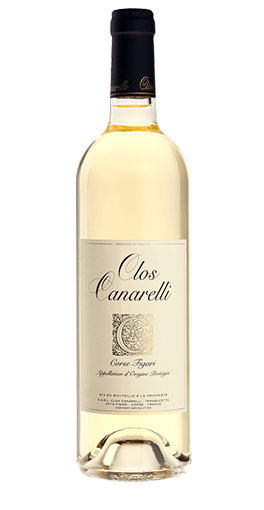
Among the must-visit estates on the “Island of Beauty” are Domaine Renucci, in the Corse Calvi AOC, run by Bernard Renucci since 1991; Clos Canarelli, led by Yves Canarelli in Figari, at the foot of the Omu di Cagna massif near Bonifacio, which produces a very fresh and mineral-driven, high-end Corsican wine made using biodynamic methods; and Domaine Comte Abbatucci, one of the island’s oldest vineyards, located in the Taravo Valley, where Jean-Charles Abbatucci cultivates no fewer than 18 indigenous grape varieties, also using biodynamic methods. In addition, there are other estates typical of the “Island of Beauty” that possess a unique character: E Croce Yves Leccia, Clos Poggiale, Antoine Arena, Clos Signadore, and Nicolas Mariotti-Bindi.
Food and Wine Pairings
White and rosé wines pair perfectly with many appetizers, fish and seafood starters, and cheese platters featuring goat and sheep cheeses such as brocciu. Red wines, such as a Faustine Rouge 2018, pair well with dishes such as lamb with olives, kid with rosemary, or osso buco, as well as with a platter of local cured meats (figatellu, lonzu, prisuttu).
For more information, visit the official website for wines from the Corsica region.
Buy the best wines from Corsica at a private sale!
Rated site21550 reviews
-20€
Starting at €99 on your first order
Discover our selection of the best Corsican wine producers
Corsican Wine Appellations
Our latest sales of Corsican wines
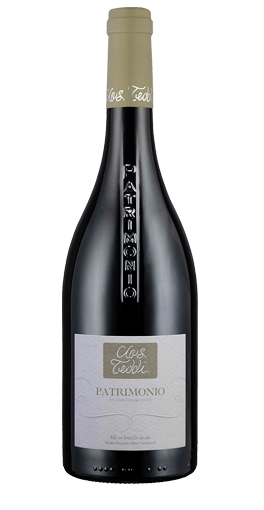
Clos Teddi - Patrimonio Tradition rosé 2025
Patrimonio|Rosé wine|Organic

More info


Domaine Castellu di Baricci - Sartène Rosé 2025
Sartène|Rosé wine|Organic
More info





Domaine Comte Abbatucci - IGP Ile de Beauté Faustine Vieilles Vignes rosé 2025
IGP Ile de Beauté|Rosé wine|Organic


4.5/5 ( 2024 / 2 reviews)
More info

Domaine Comte Abbatucci - IGP Ile de Beauté Faustine Vieilles Vignes blanc 2025
IGP Ile de Beauté|White wine|Organic


4.7/5 ( 2024 / 3 reviews)
More info

Loading...