
21550 customer reviews
Bergerac

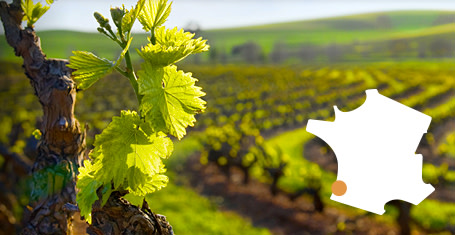
The right to use the controlled designations of origin (AOC) “Bergerac,” “Bergerac sec,” “Côtes-de-Bergerac,” and “Côtes-de-Bergerac moelleux” was recognized by the decree of September 11, 1936, for red or white Bergerac wines produced within the territory of the Bergerac district, in accordance with a production area established and defined by the INAO.
The Bergerac wine region is crossed from east to west by the Dordogne River and irrigated by many of its tributaries. Geologically, the region’s outcrops are primarily associated with the Tertiary and Quaternary periods. The Bergerac wine region stretches across hilly landscapes (calcareous “boulbènes” and “terreforts” on the slopes of Monbazillac) and plateaus (Tertiary limestone plateaus and Quaternary gravel) that receive ample sunshine, on both banks of the Dordogne River. The total area of the Bergerac wine region under production is approximately 13,000 hectares, encompassing all Bergerac AOCs combined, of which 7,500 hectares are for red Bergerac AOCs and 5,500 hectares for white Bergerac AOCs.
The grape varieties used for red Bergerac wine are Cabernet Sauvignon, Cabernet Franc, and Merlot, along with smaller proportions of Côt or Malbec, and more rarely Fer Servadou, Mérille, or Périgord. For white Bergerac wine , the grape varieties used are Sémillon, Sauvignon, Muscadelle, and, in very small proportions, Ondenc and Chenin Blanc. Ugni Blanc is a secondary grape variety (maximum 25%). The percentage of Sauvignon in the blend must be at least equal to that of Ugni Blanc if the latter is present. For all Bergerac AOCs, wines must be a blend of at least two grape varieties. The qualities of the appellation can be fully appreciated, in particular, through the wines offered by Château Tour des Gendres, Château Moulin Caresse, and Domaine de L’Ancienne Cure.
The Bergerac wine region is crossed from east to west by the Dordogne River and irrigated by many of its tributaries. Geologically, the region’s outcrops are primarily associated with the Tertiary and Quaternary periods. The Bergerac wine region stretches across hilly landscapes (calcareous “boulbènes” and “terreforts” on the slopes of Monbazillac) and plateaus (Tertiary limestone plateaus and Quaternary gravel) that receive ample sunshine, on both banks of the Dordogne River. The total area of the Bergerac wine region under production is approximately 13,000 hectares, encompassing all Bergerac AOCs combined, of which 7,500 hectares are for red Bergerac AOCs and 5,500 hectares for white Bergerac AOCs.
The grape varieties used for red Bergerac wine are Cabernet Sauvignon, Cabernet Franc, and Merlot, along with smaller proportions of Côt or Malbec, and more rarely Fer Servadou, Mérille, or Périgord. For white Bergerac wine , the grape varieties used are Sémillon, Sauvignon, Muscadelle, and, in very small proportions, Ondenc and Chenin Blanc. Ugni Blanc is a secondary grape variety (maximum 25%). The percentage of Sauvignon in the blend must be at least equal to that of Ugni Blanc if the latter is present. For all Bergerac AOCs, wines must be a blend of at least two grape varieties. The qualities of the appellation can be fully appreciated, in particular, through the wines offered by Château Tour des Gendres, Château Moulin Caresse, and Domaine de L’Ancienne Cure.
For more information, visit the website at Bergerac
Buy the best Bergerac wines at a private sale!
Rated site21550 reviews
-20€
Starting at €99 on your first order
Discover our selection of the best Bergerac wine producers
Our latest sales of Bergerac wines
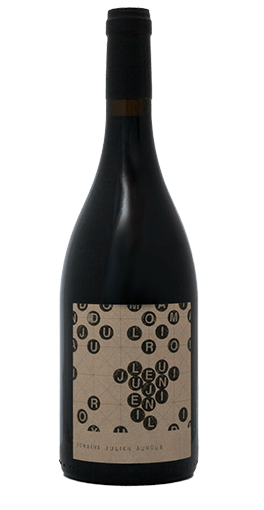
Domaine Julien Auroux - Bergerac Sans Bois Ni Loi rouge 2023
Bergerac|Red wine|Organic

More info

Domaine Julien Auroux - Bergerac Sans Bois Ni Loi blanc 2025
Bergerac|White wine|Organic
More info

Domaine Albert de Conti - Bergerac Galapia 2024
Bergerac|Red wine|Organic
More info

Domaine Albert de Conti - Bergerac Cuvée des Conti 2025
Bergerac|White wine|Organic
More info

Château Tour des Gendres - Bergerac Moulin des Dames 2023
Bergerac|White wine|Organic
More info

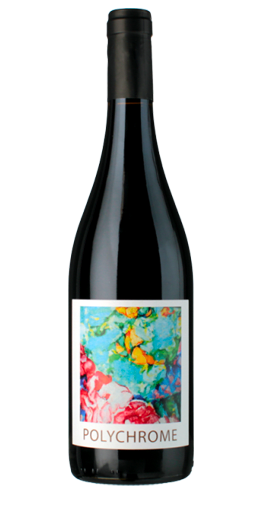


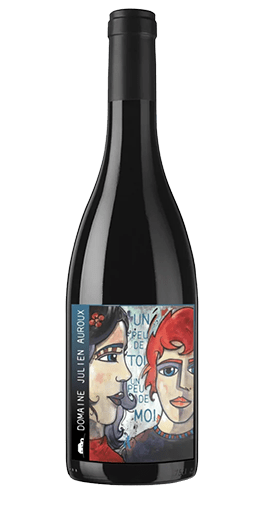
Domaine Julien Auroux - Bergerac Un peu de Toi, un peu de Moi 2023
Bergerac|Red wine|Organic
4/5(2 avis)
More info


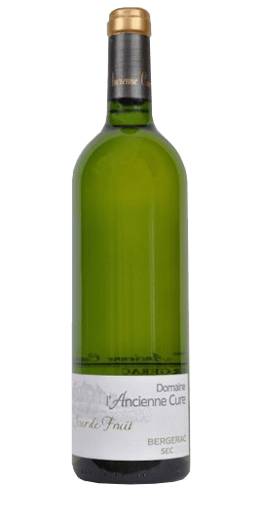

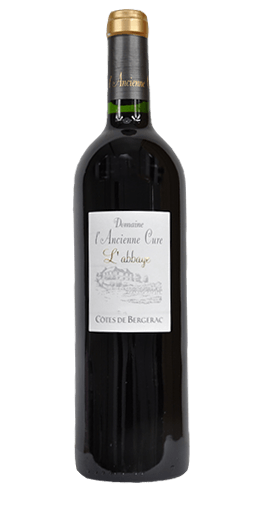
Domaine L'Ancienne Cure - Bergerac L'Abbaye 2019
Bergerac|Red wine|Organic
More info


Loading...