
21564 customer reviews
Wines from Chile
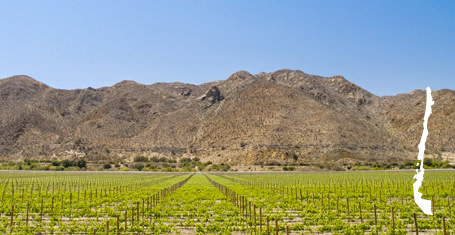
Winegrowing in Chile began with the arrival of the Spanish “conquistadors.” The first grapevines were planted there in 1541 in Santiago. In the early 19th century, prominent Spanish families, taking advantage of the exceptional climatic conditions, began planting large vineyards to meet the ever-growing local demand. Around the mid-19th century, the French model—synonymous with quality—was adopted to restructure the vineyards. As a result, many grape varieties from Aquitaine were introduced there. With few regulations, the wine industry produces wines of widely varying quality. However, since the early 1990s, Chilean winemakers have been pursuing a policy of improving their wines by adopting techniques that have proven successful elsewhere.
Chile is a vast country with climates that vary significantly by latitude. Thus, the north is hot, arid, and desert-like; the Central Valley enjoys a Mediterranean climate; and the south has an oceanic climate. There are generally seven main wine-growing regions, each with distinct characteristics: the Aconcagua, Casablanca, Maipo, Limari, Curicó, Maule, and Itata valleys. Chile’s wine-growing regions are ideally situated between the Pacific Ocean to the west and the Andes mountain range to the east. The exceptional natural environment and climatic conditions particularly conducive to viticulture have notably fostered the growth of vineyards in the Central Valley. Also discover the Las Ninas and Sena wineries.
The grape varieties are of European origin. They have been spared from downy mildew and phylloxera and consist mainly of Cabernet Sauvignon, Cabernet Franc, and Malbec for reds, and Sauvignon and Chardonnay for whites. Merlot, Cémillon, Riesling, Muscat, and Carménère are also found here, with the latter becoming something of a national specialty. The Païs grape, which is native to Chile, is used for lower-quality local wines.
Chile is a vast country with climates that vary significantly by latitude. Thus, the north is hot, arid, and desert-like; the Central Valley enjoys a Mediterranean climate; and the south has an oceanic climate. There are generally seven main wine-growing regions, each with distinct characteristics: the Aconcagua, Casablanca, Maipo, Limari, Curicó, Maule, and Itata valleys. Chile’s wine-growing regions are ideally situated between the Pacific Ocean to the west and the Andes mountain range to the east. The exceptional natural environment and climatic conditions particularly conducive to viticulture have notably fostered the growth of vineyards in the Central Valley. Also discover the Las Ninas and Sena wineries.
The grape varieties are of European origin. They have been spared from downy mildew and phylloxera and consist mainly of Cabernet Sauvignon, Cabernet Franc, and Malbec for reds, and Sauvignon and Chardonnay for whites. Merlot, Cémillon, Riesling, Muscat, and Carménère are also found here, with the latter becoming something of a national specialty. The Païs grape, which is native to Chile, is used for lower-quality local wines.
Also discover a unique Chilean wine with the 2016 Las Ninas vintage.
Buy the best Chilean wines at a private sale!
Rated site21564 reviews
-20€
Starting at €99 on your first order
Discover our selection of the best Chilean wineries
Chilean Wine Appellations
Our latest sales of Chilean wines
VIK - Cachapoal Valley La Piu Belle 2022
Cachapoal Valley|Red wine

More info

VIK - Cachapoal Valley Milla Calla 2022
Cachapoal Valley|Red wine
More info

VIK - Cachapoal Valley A Carmenere 2023
Cachapoal Valley|Red wine
More info

Errazuriz - Vallée de l'Aconcagua Carmenere Estate 2022
Vallée de l'Aconcagua|Red wine
More info

Errazuriz - Vallée de l'Aconcagua Kai 2019
Vallée de l'Aconcagua|Red wine
More info

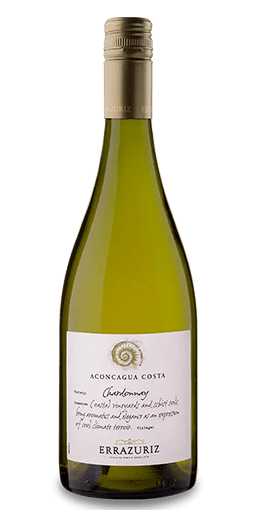
Errazuriz - Vallée de l'Aconcagua Aconragua Costa Chardonnay 2022
Vallée de l'Aconcagua|White wine

3/5(1 avis)
More info
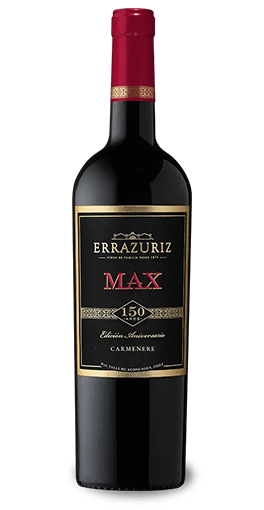
Errazuriz - Vallée de l'Aconcagua Max Carmenere 2023
Vallée de l'Aconcagua|Red wine
More info
Almaviva - Vallée de Maipo 2022
Vallée de Maipo|Red wine
More info


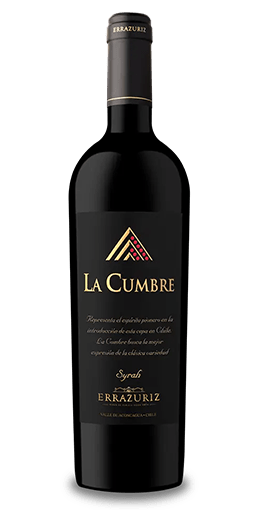
Errazuriz - Vallée de l'Aconcagua La Cumbre 2019
Vallée de l'Aconcagua|Red wine
More info
Errazuriz - Vallée de l'Aconcagua Kai 2020
Vallée de l'Aconcagua|Red wine
More info
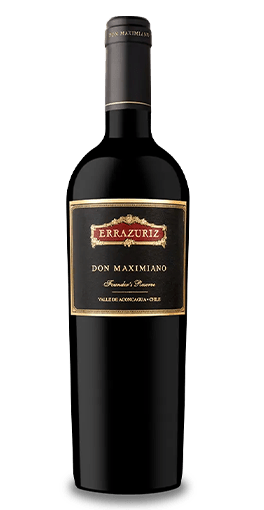
Errazuriz - Vallée de l'Aconcagua Don Maximianio 2020
Vallée de l'Aconcagua|Red wine
More info

Tarapaca - Vallée de Maipo Late Harvest 2022 (liquoreux - 50cl)
Vallée de Maipo|White wine
5/5(1 avis)
More info

Loading...